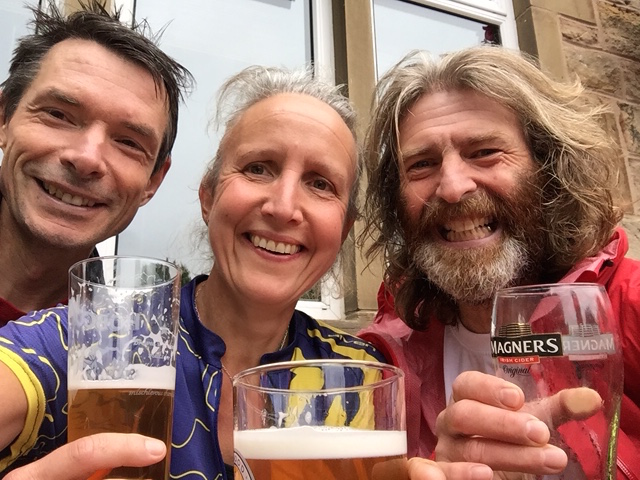
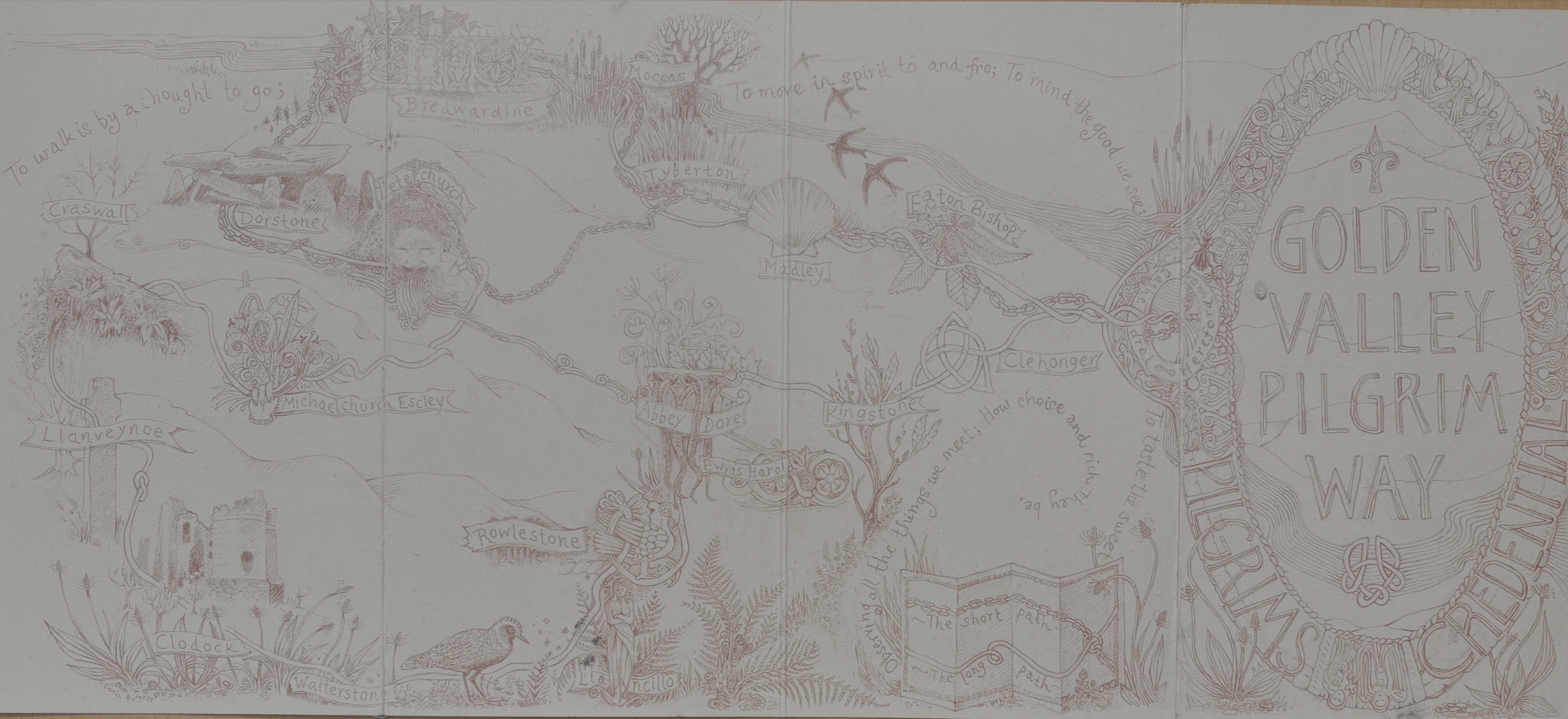
Herefordshire’s GVPW is a 67 mile circular route from Hereford Cathedral, stretching west towards the Welsh border. Overnight stays on camp-beds can be booked in selected churches along the route, and this is known as “champing”. Facilities in these “night sanctuaries” can be fairly basic, but the stunning old churches and quaint villages more than compensate.
Together with three friends, I set out on the route in July 2026, just after the hottest part of the year. We arranged to leave our car at Belmont Abbey so we could fit the journey from Derbyshire and the first day’s walk of 10 miles into one day. The abbey is a working Benedictine Monastery that welcomes visitors and pilgrims. None of us are religious, but we were thrilled when the Guestmaster Father Jonathan stamped our Pilgrims Credential or passport!
Day 1: Belmont Abbey to Tyberton
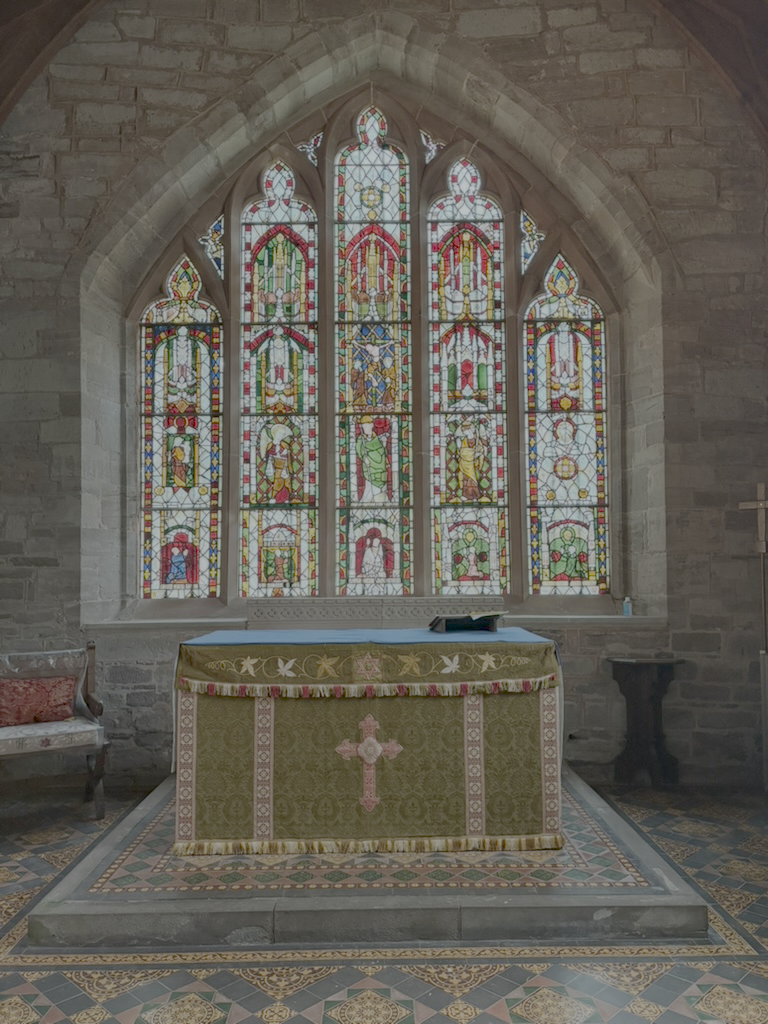
Our first stop after parched fields of stubble was St Michael & All Angels Church at Eaton Bishop, with stained glass windows dating from the 1330s. We were led to our next church 3km further on by a red kite, soaring high over the recently harvested fields. Saint Mary’s Church in Madley had a Norman crypt, a respite from the afternoon heat. We admired the exuberant modern tripytch there, not knowing we would meet Edward Kelly, its creator, half an hour later!
All the time we were learning a new lexicon of church furnishings; at Madley we came across “sedilia” or recessed stone seats for clergy on the north or south side of the altar, and “misercords” beautifully carved hinged seats in the choir stalls, designed to provide discreet support when standing for long periods.
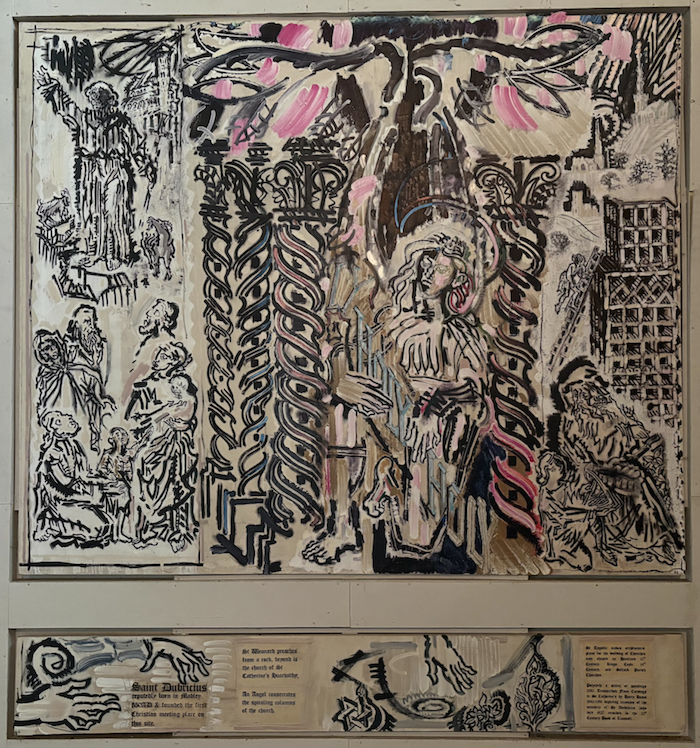
Having stamped our passports, we were preparing to move on when we began chatting to a couple who had just come in, and learnt that the gentleman was the artist who had painted the Lilies of the Field triptych (2016) in the crypt, as well as the St Dubricius polyptych in the main church (2012), visiting for the first time in several years!
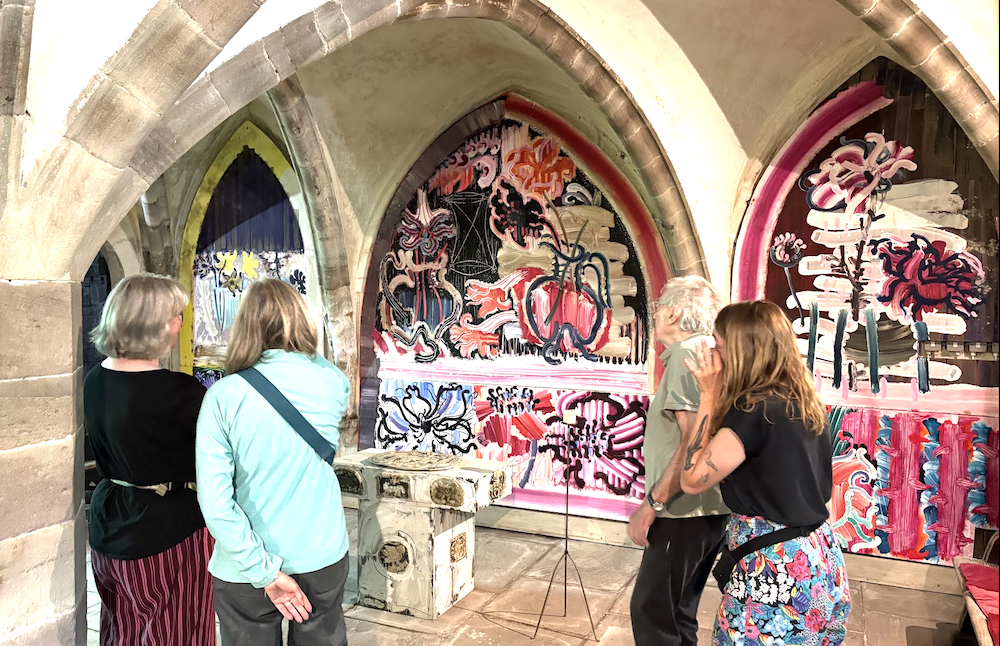
Madley is believed to have been the birthplace of Saint Dubricius in around 550 CE. He was the son of a princess, but when her father, King Pebiau, discovered she was pregnant he tried to drown her, and, when this failed, by casting her onto her funeral pyre. A day later however, she was found in the ashes of the pyre nursing her newborn son, Dubricius. Later, an angel appeared to Dubricius and commanded him to build a chapel in a place where he would find a white sow lying with her piglets. The place was called Moccas, and we would pass it the following day.
Edward Kelly states that the paintings are transcribed from carvings at Hoarwithy Church by Harry Hems (1842–1916) that depict the life of St Dubricius, as described in the twelfth-century Book of Llandaff – Swansea – where Dubricius eventually became bishop. The panels of the polyptych are expansive and vibrant, with expressive faces and exaggerated hands and feet to ground the protagonists.
As we were leaving the church, we were thrilled to meet the Reverend Simon Lockett, who established the pilgrimage route 5 years ago, and who has transformed the isolated churches of the Golden Valley into award-winning community hubs. We still had a few miles left to do, so couldn’t chat for long. In fact, we didn’t get to Tyberton church until 20:15. Fortunately, we’d had a pub meal en route (at the Red Lion back in Madley), as Jules had carefully tallied our eating options for the week. Not all the overnight stays had pubs, so sometimes we would need to buy ahead and carry!
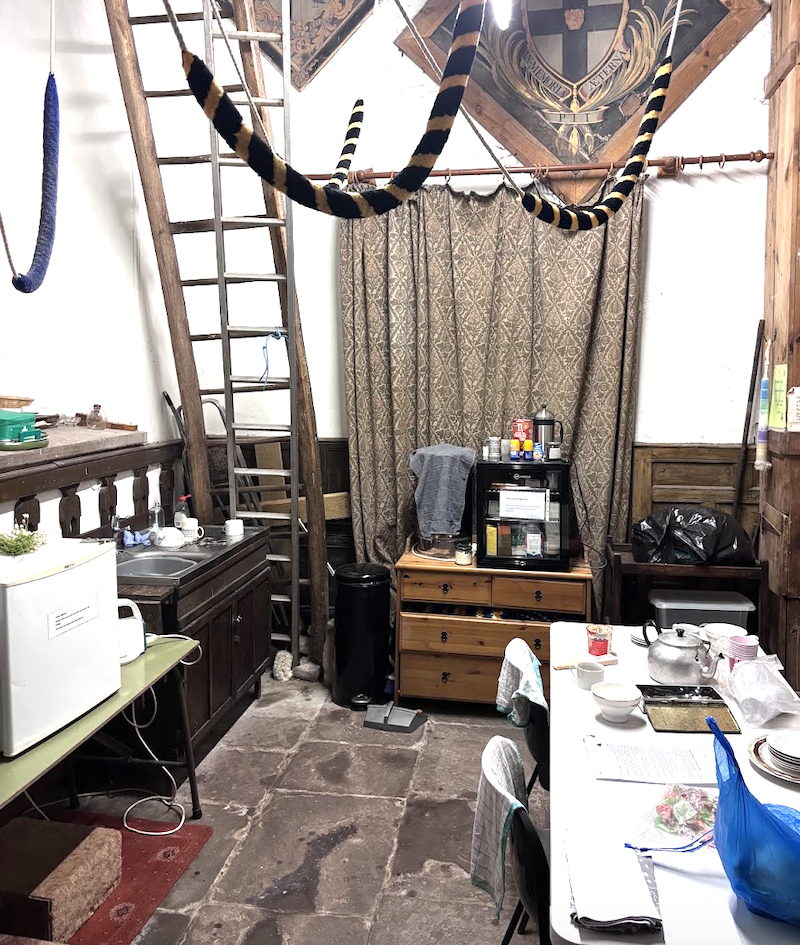
The church was very cosy, with pew stalls in which to set up our camp-beds. It was amazing to go to sleep and wake up in our first church, and I was only woken once briefly by the hourly bells!
Day 2: Tyberton to Peterchurch
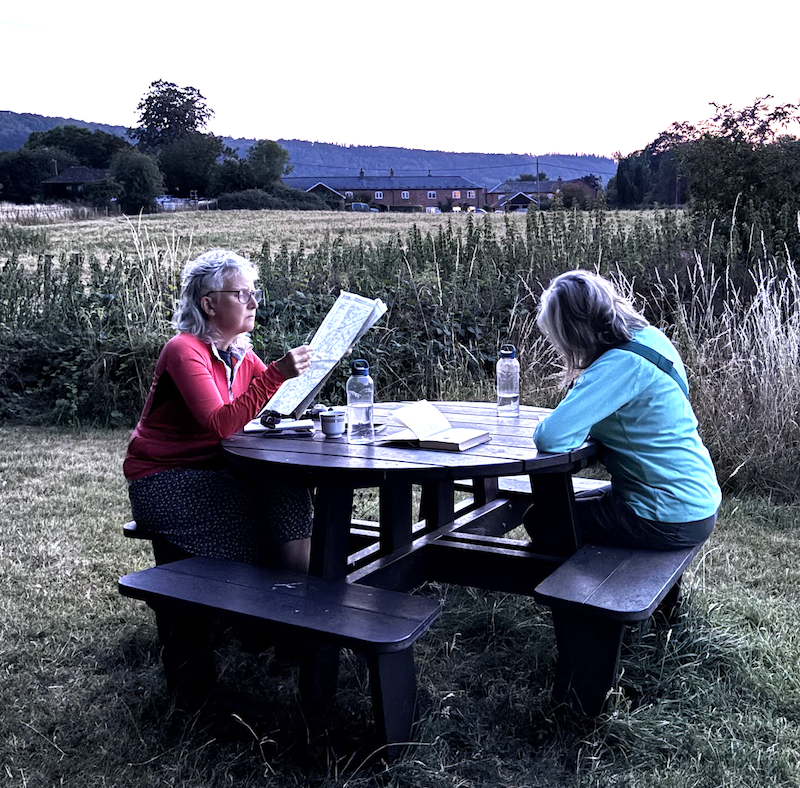
This was our longest day at 14 miles plus ascent, and a swim in the Wye. Sue cut out the first 4 miles by using the bus, and we arranged to meet at Bredwardine. We walked across fields dotted with huge guardian oaks, and had to do extra distance to exit an orchard south of Byecross Farm. There, we refilled our water bottles and had a Mars Bar, then diverted west along the Wye towards Moccas. Visiting the church would have added 2km extra, so that’s one of a few things on the list for a later car trip!
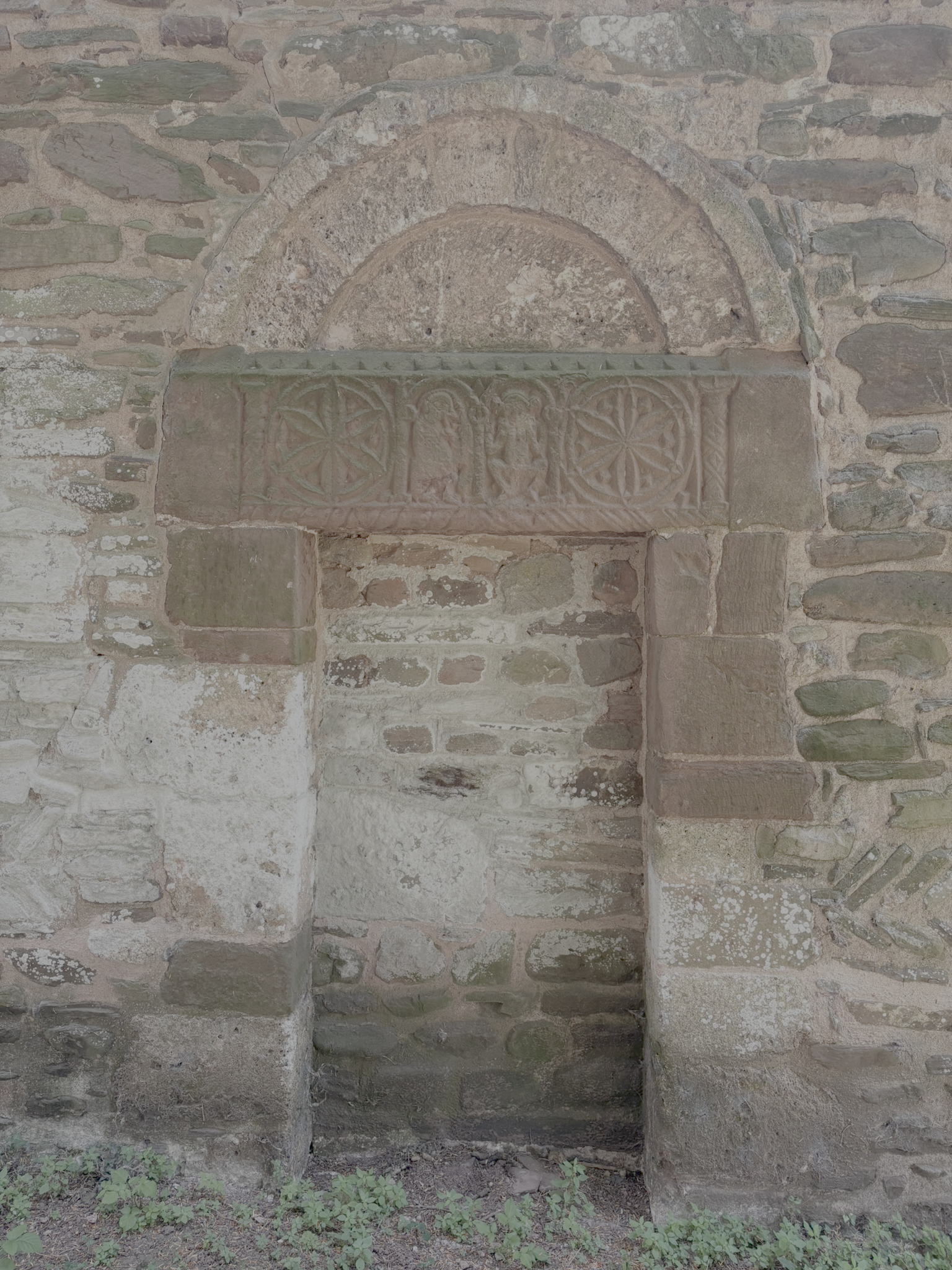
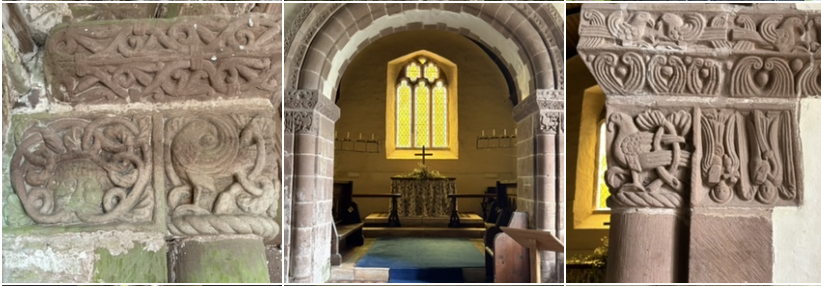
Bredwardine Church was noted for its ancient carvings on its north and south door lintels, and the grave site of incumbent clergyman, the diarist Reverend Francis Kilvert (1840–79). Carvings on the northern sandstone lintel included a sheelanagig or fertility symbol, and a birdman. Inside was the tomb of Sir Roger Vaughan “killed defending Henry V at the Battle of Agincourt, 1415”.
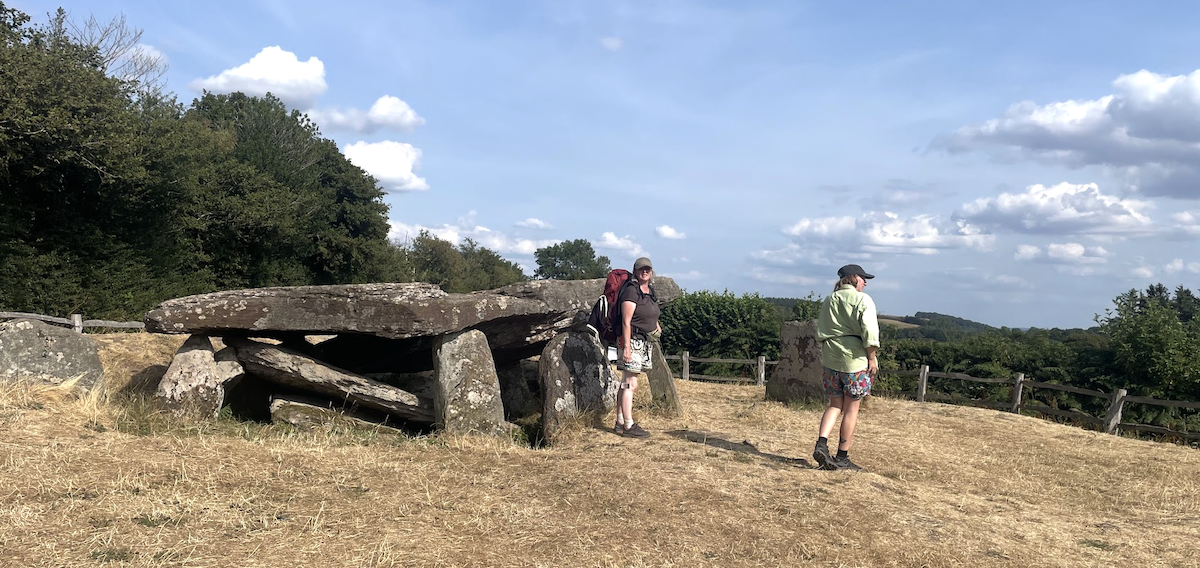
A swim in the Wye was a nice cool-down before the long climb up to Arthur’s Stone, a collapsed long-barrow with sweeping views. Two teams of students from Manchester Uni were excavating nearby. Jules had found out that the monument features in Shadowlands, the 1993 biopic of the writer CS Lewis who created the Narnia stories. The stones may have inspired the setting for the sacrifice of Aslan.
From here it was steeply down to Dorstone, where we planned to take a bus for the last 3 miles to Peterchurch. But rescheduled timetables due to a road closure baffled us. The students were now installed in the pub and we filled our waterbottles from the tap on the village green. A kindly local offered to drive us to Peterchurch and we accepted, not relishing another late finish.
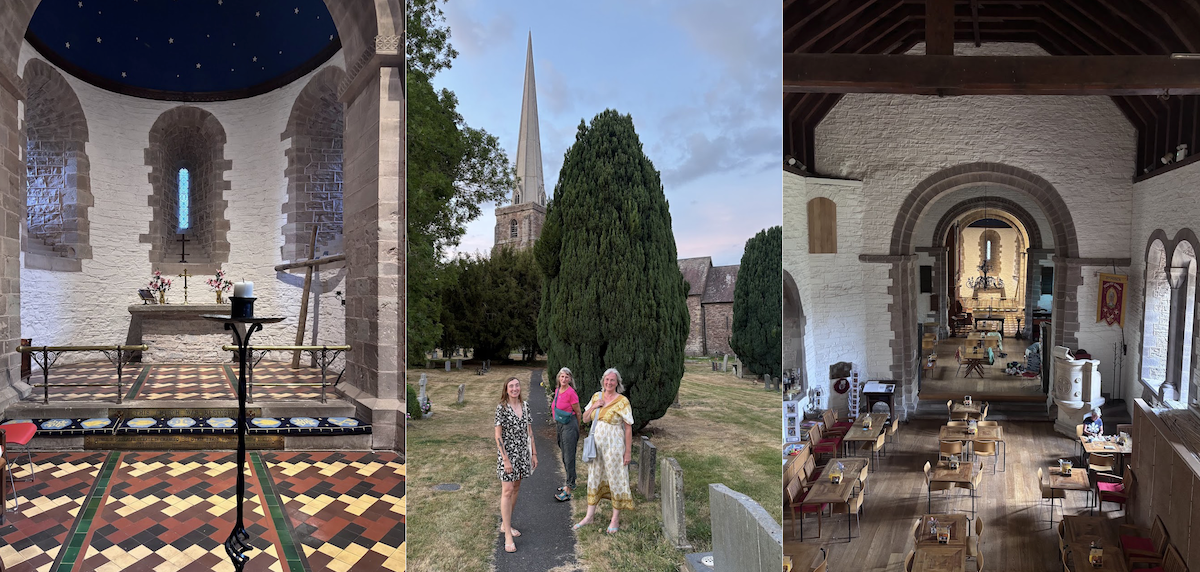
Saint Peter’s Church at Peterchurch was quite large, with a fibregrass spire installed in 1972 that was, for some time, the tallest in the UK. Its western end had been converted to a café and community hub in 2012, in a bid to tackle rural isolation. A huge hollow yew tree stood in the churchyard. In 1363, Edward III’s Archery Law required men and boys practise archery on Sundays and holidays, and I wondered if its limbs had once been used to make longbows.
After a meal and shared pudding at the nearby Broughton pub/restaurant, we set up our beds near the altar. Wasps were swarming near the windows, and we hoped they would settle once we switched off the lights, but Sue was stung twice and Jules once. All rather jeopardous, as I’m almost allergic to wasp stings, but in the end we managed an okay night’s sleep.
Day 3: Peterchurch to Michaelchurch
We started the day with a 2 mile walk in search of St Peter’s holy well, which we must have missed by just metres. Another one for the car trip list!
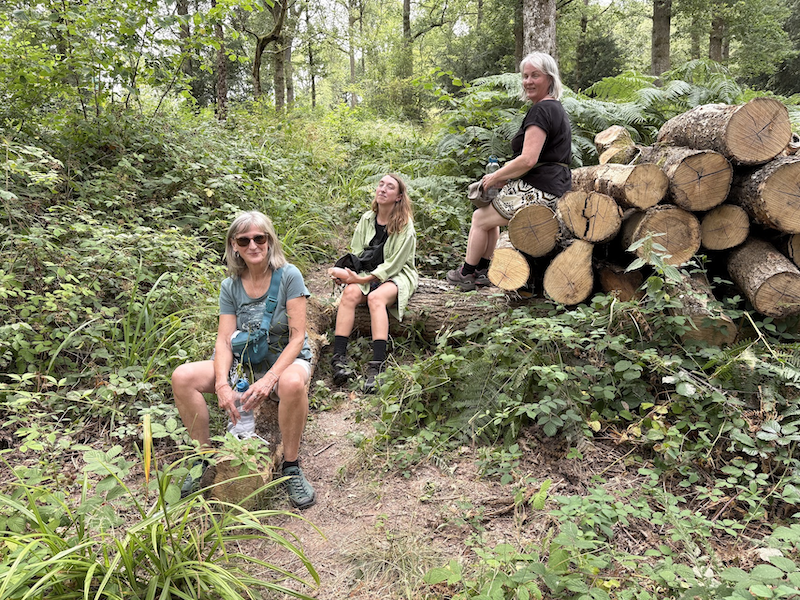
At the local shop, we bought some lunch and a packet of ibuprofen each, not something pilgrims of old had recourse to! Back at the church, the café was now open so we all had a cooked breakfast, which we took outside to escape the wasps. Amazingly, Lorna and her husband on the next table offered to take our packs on Saint Michael & All Angels at Michaelchurch, so we had a short pack-free day, which was very welcome. We crossed the River Dore, from which the Golden Valley got its name (d’or in French = golden) and walked the 5 miles over hills and through woods to Michaelchurch, and – lo and behold – there inside the church were our packs! Thank you Lorna, our first Baggage Angel!
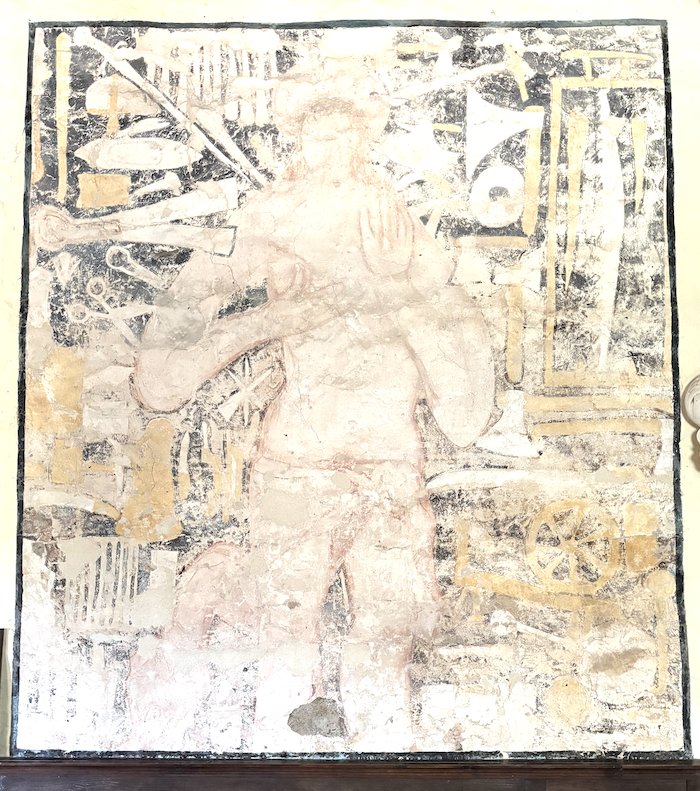
We admired the medieval fresco “Warning to Sabbath Breakers” from around 1500. Christ is surrounded by carpentry and cloth-making tools, and the panel next to it states “The most commonly held interpretation of this subject is the “a warning that those who break the Sabbath by working contribute to the ongoing Passion or suffering of Christ.”
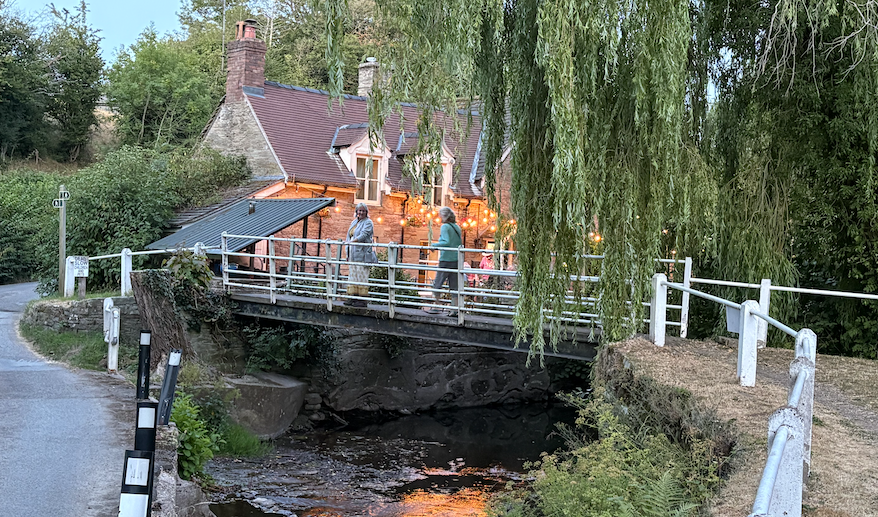
Showers were available at the campsite 300m away, next to the picturesque Bridge Inn, and we took the opportunity for some washing of clothes and writing our diaries. The two resident Anatolian sheepdogs or kangals were lounging in the sun and enjoyed our attention. Swallows were nesting in the corner of the smoking shelter, the parents brining the three babies prize titbits. We had to make do with an eclectic combo of chips, pickled eggs and instant noodles for our meal, as the pub had a party of 47 in for food that evening, and no room for nomads. But I’m sure medieval pilgrims suffered more privations than this (#soft_hermitting).
By pure coincidence, our overnighting coincided with Friday bell-ringing practice, and we were invited to have a go. This was surprisingly difficult, but interesting and a lot of fun. Five of the bells were cast in 1732 at Abraham Rudhall’s foundry in Gloucester, costing £160 or £20k at today’s value. The tower was restored in 1897 and the bells re-hung. They were rung by parishoners until the 1980s, but from then on only by visiting teams of ringers. In 2010 a bell became badly cracked and was restored, and a new local team of ringers was formed. A memorial bell for the Great War centenary was commissioned from Italy in 2017.
The Michaelchurch bell-ringers were happy to explain the mechanics, and had a model of a bell with headstock and rope to demonstrate. Teamwork is crucial, and the person on the treble bell leads the session. A call of “Look to./Treble’s going./She’s gone.” begins each peel. The treble is the lightest and highest-pitched bell, but still weighs a quarter of a tonne. Rope burns are a risk, and the padded part of the rope is called “the sally”. The ropes are winched out of the way afterwards on a wooden “spider” for safety.
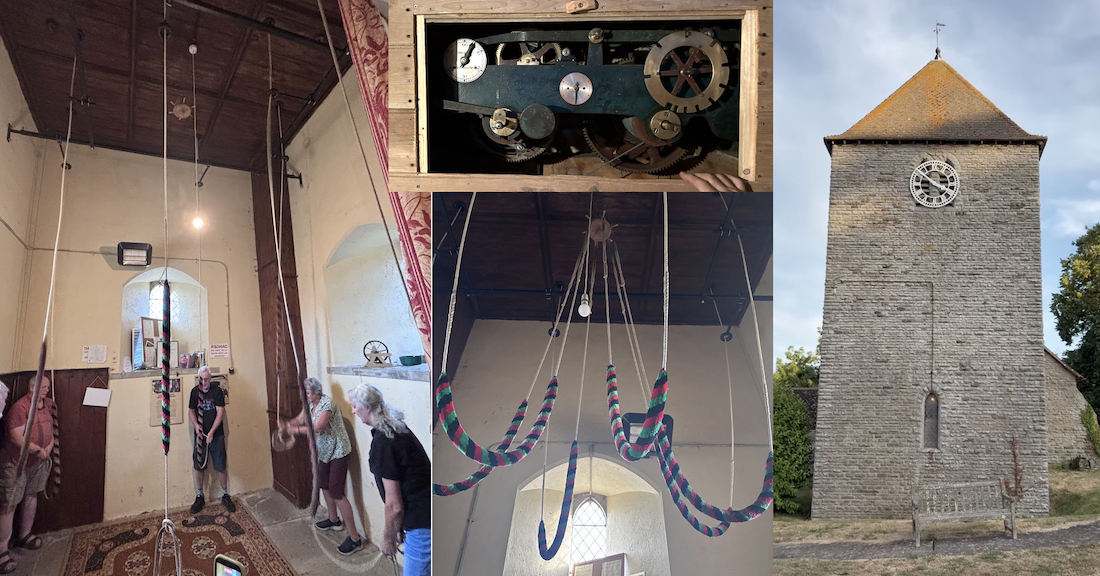
After the session we were allowed to climb up into the tower to see the weekly winding of the clock (inset above), which had been made by Thomas Hartley of Shillingford, Berkshire, some time between 1922 and 1932. What a privilege to see all of this!
We then went to retrieve our laundry and use the facilities at the Bridge Inn, where we watched bats scud about the river before we turned in. This was the church with the most distant toilets (at 300m), and we did well to make just one nocturnal visit apiece!
Day 4: Michaelchurch to Longtown and Cloddock
This was another treat of a day in terms of miles, as we took a direct road route instead of the steep “Cat’s Back”. Made even better by Naomi, who was walking her dog across the church yard and who agreed to take our bags on to Cloddock by car. Thank you Baggage angel No 2!
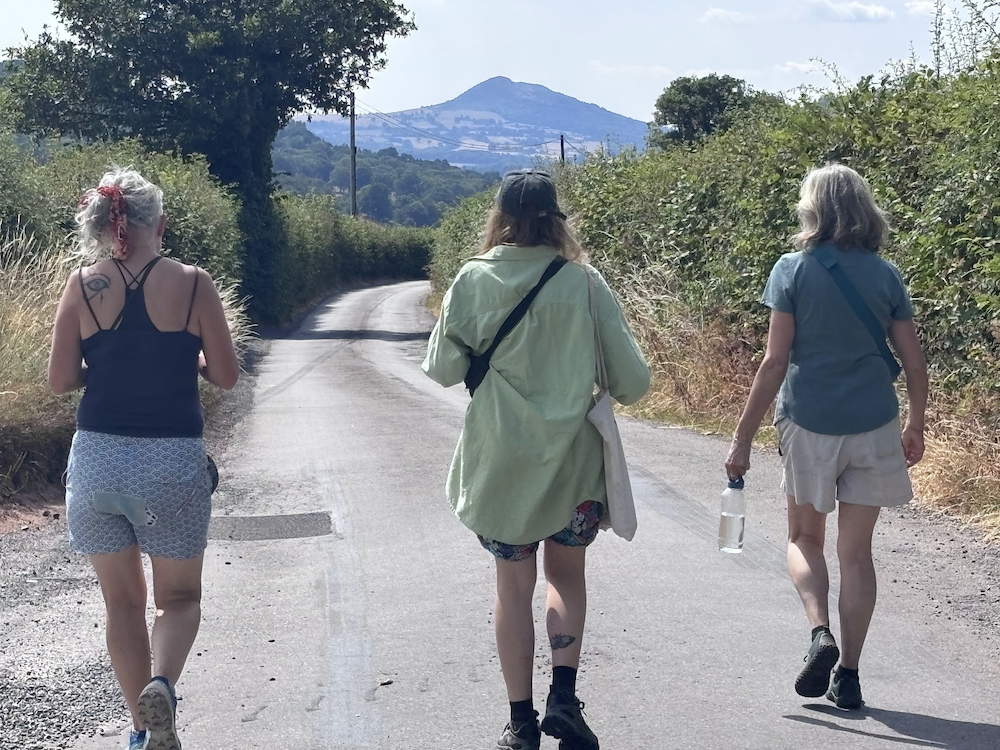
After a 5 mile downhill trudge, with great views of the Skirrid, we arrived at Cloddock’s Hope Stores, where we had lunch and were tipped off about a christening in the church that afternoon. We were hoping for a swim in the River Monnow, so pressed on to the church before the service. The cleaning lady welcomed us, and knew nothing about the christening, but knocked off early just in case! Then the organist arrived to prepare for the service and invited us to attend. It was still some time off, so we changed into our swimming gear, and on the way out met Chris the churchwarden who showed us the swimming spot (as well as agreeing to transport our bags the next day).
When we got back to the church, Lucy the vicar was preparing for the baptism service and confirmed we could stay, so we smartened ourselves up and sat on the balcony. It was a nice modern service, and the children were given dinosaur stickers and invited to blow bubbles around the font.
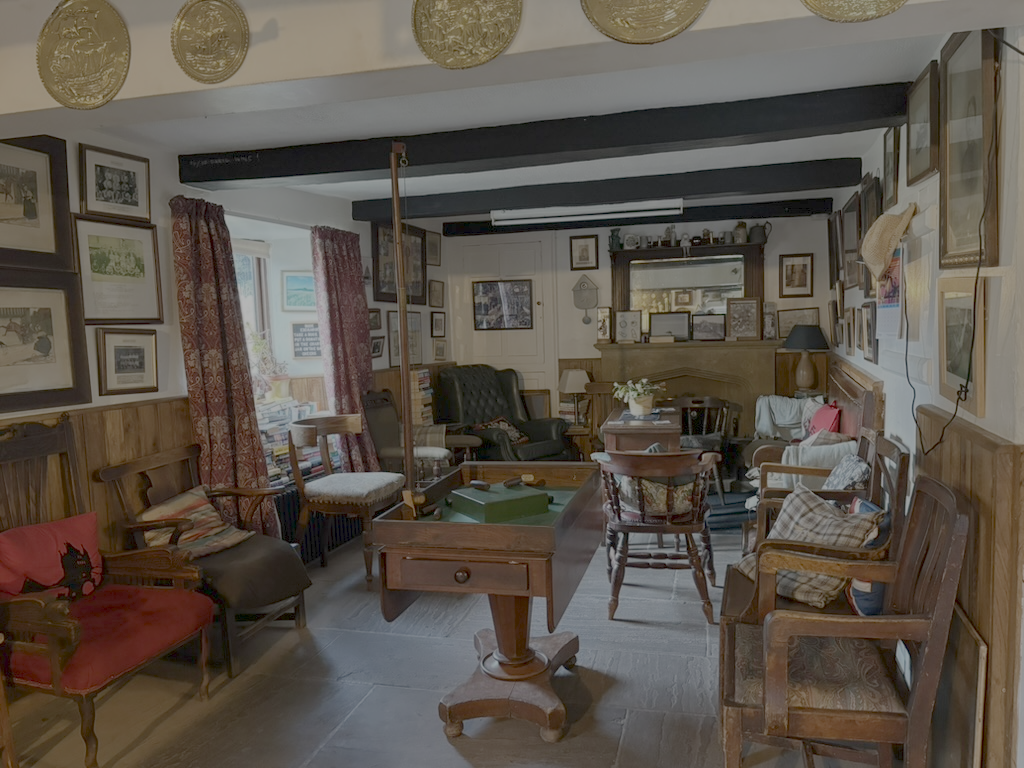
Long afternoons on pilgrimage are a treat, and now it was time to meet Chris for the swim proper. We were nibbled by tiny fish – the minnows of the Monnow – as we sat on the rock terraces, and Chris said that otters were occasionally sited. After that, we walked the couple of miles up to Longtown to see the ruined castle and a Tudor garden with a mulberry and a medlar tree. Dinner was on the way down at the Crown Inn (1751). We had a last drink at the Cornewall Arms in Cloddock itself, where we played cards and bar billiards, and were served through a hatch to the landlady’s living room. No, it’s not a typo; it’s named after the Cornewall baronetcy of Moccas Court.
Day 5: Cloddock to Ewyas Harold
It was a muesli bar breakfast today but with plentiful hot drinks. The frugality didn’t last though, as it was Sunday and we booked a pub lunch at the Carpenter’s Arms, Walterstone, at the stroke of noon. We looked around the church first, then chose our roast. All were served with Yorkshire pudding, so that took the pain out of the choice!
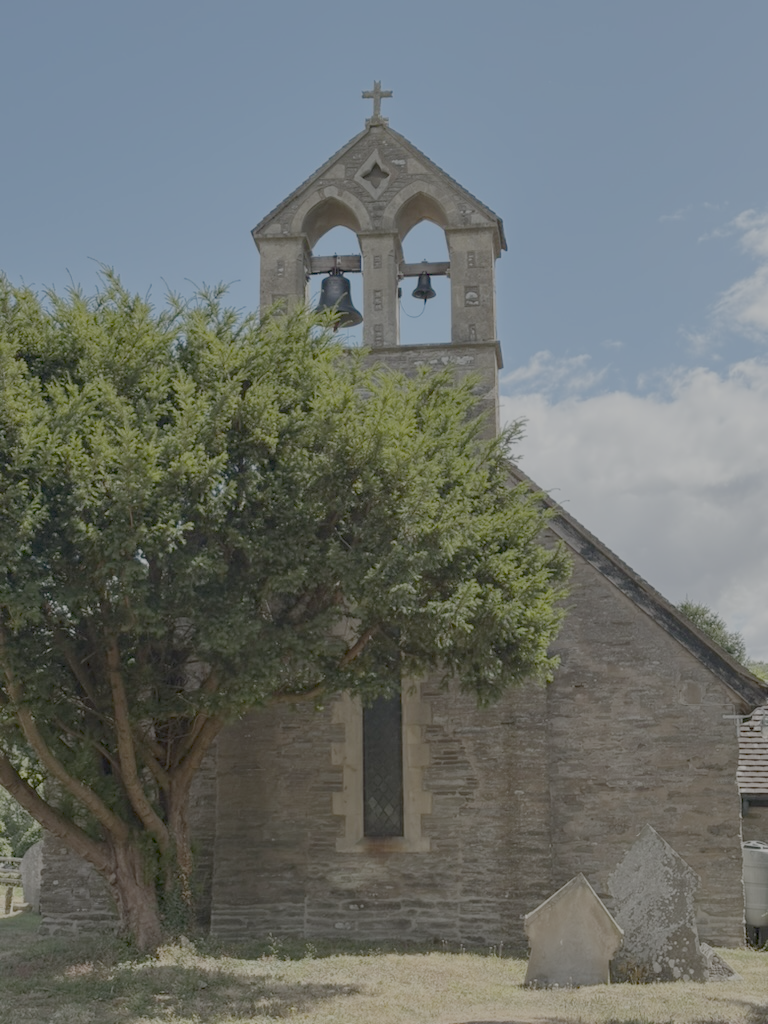
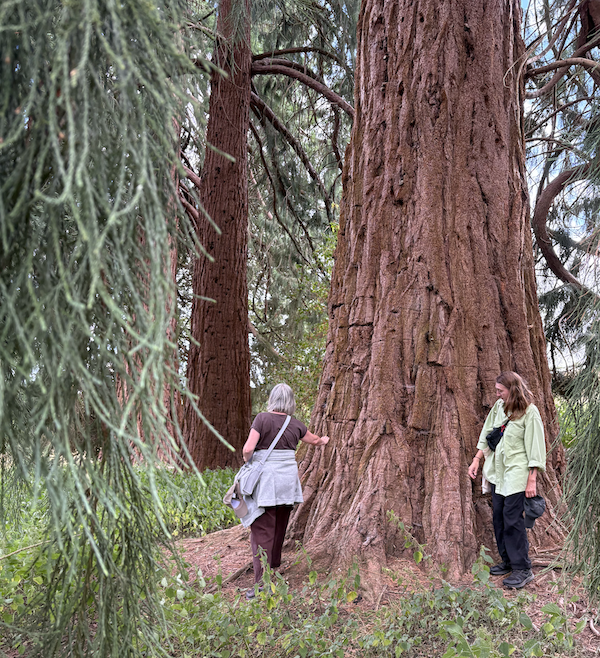
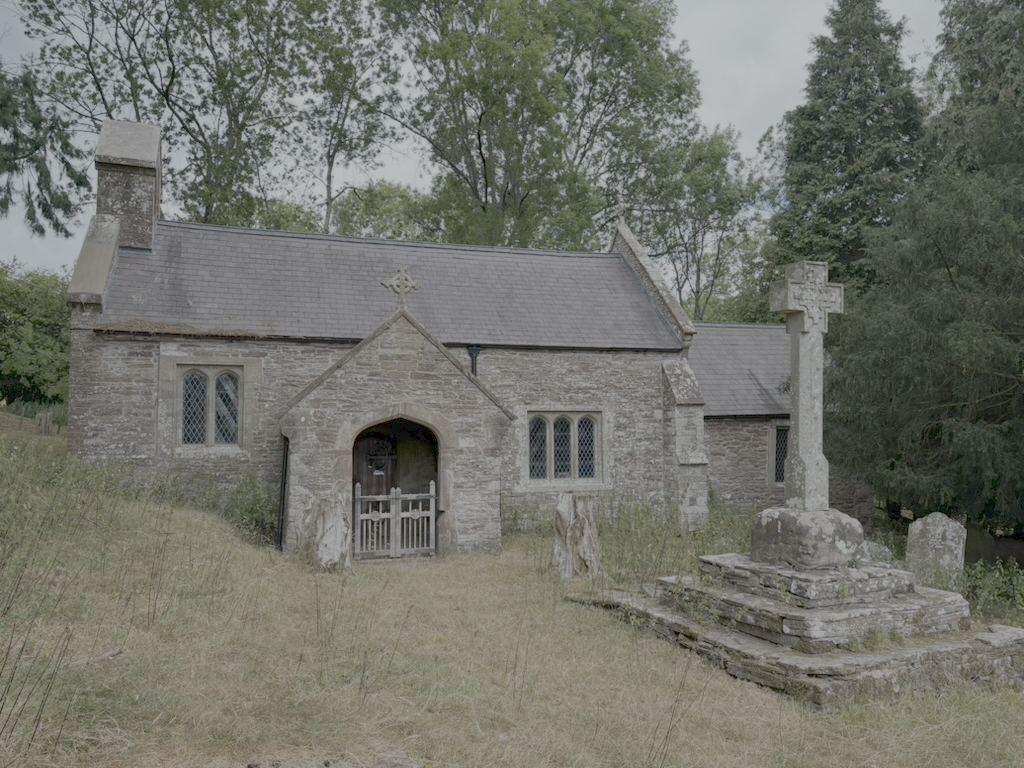
After lunch, it was up to Grove Farm ring fort (not much to see and confusing navigation), then down to the church at Llancillo, which had been deconsecrated in 2006. We approached via three huge redwoods, just to the west of the church. These, according to the Friends of Friendless Churches book we found inside, had been planted in 1928. Imagine what a 200 year-old tree would look like!
Until 1852, the church was in the Welsh Diocese of Saint David’s. A Mary Celeste among churches, with Bibles, a working pump-organ and cobwebs on the stained glass, we must have spent an hour in there!
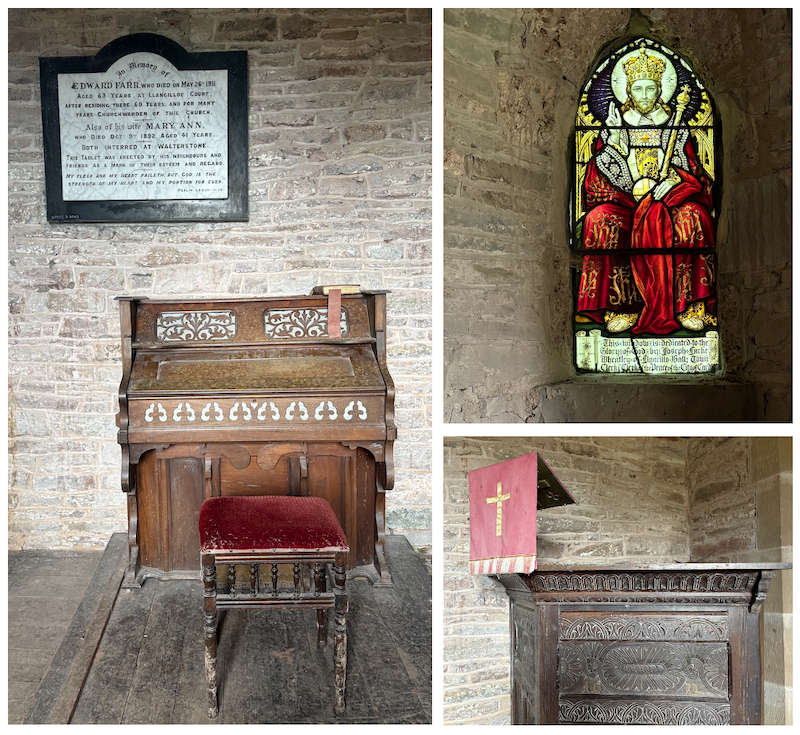
An up, a down and another up found us at Rowlestone, where we ticked the modern-pilgrim bucket-list of farm icecream! As well as getting our 10th stamp, at St Peter’s Church, which had a green man carving. We arrived at Ewyas Harold at 5:30, where Sue, who had gone ahead, bought and cooked our evening meal in the church hall. This was one of the two church with full catering facilities, though all the others had a fridge and a kettle. We had baked potatoes, beans, mushrooms and scrambled eggs, before enjoying our second shower of the week and having a drink at the neon and chrome Temple Bar, a far cry from the Cornewall Arms!
Day 6: Ewyas Harold to Kingstone
We woke at 6:15 when the leg pinged out of Sue’s camp-bed and she slid out head first! Fortunately Pilgrim Thistledown was unhurt, and we had another bonus hour for insomniac reading!
We set out north across Ewyas Harold Common, with its ways forking through the bracken and oaks. The highlight today was visiting Dore Abbey, a Cistercian abbey founded in 1147. There was no entry fee, no staff on duty, and a “quiet garden” where we had a snooze/read and refilled our water bottles.
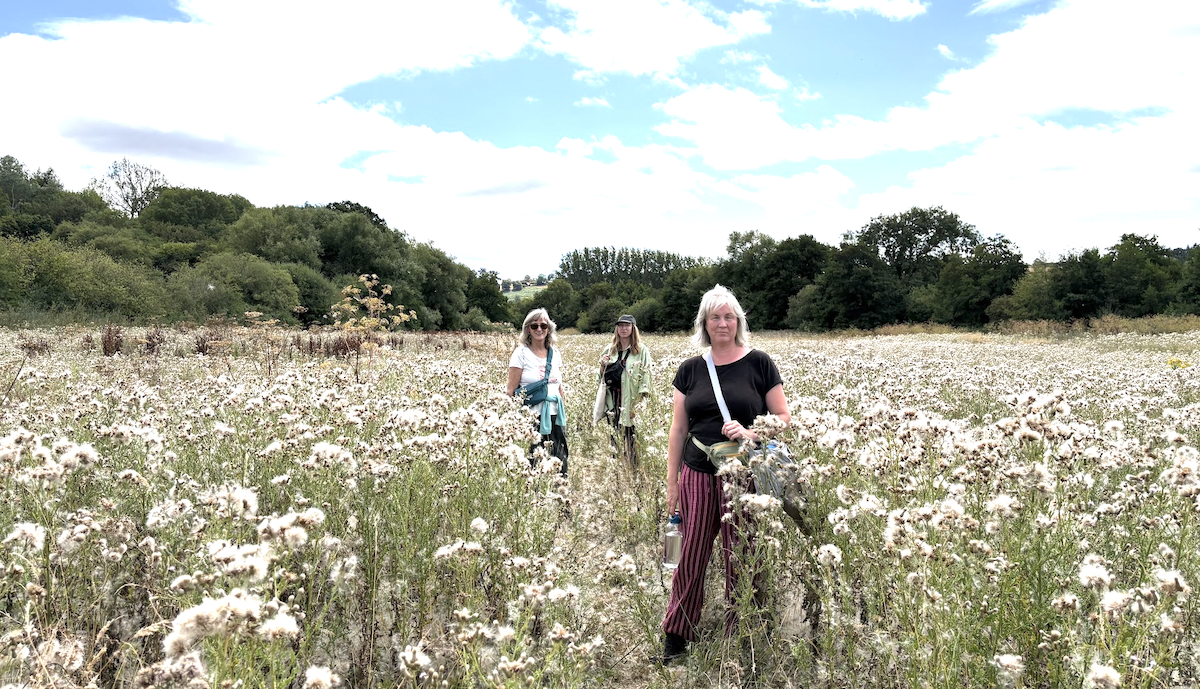
From there, it was north along the River Dore through fields of sheep and thistles, and we heard stone-chats calling. Lunch was Cornish pasties in an apple orchard. There were some diversions due to overgrown stiles, but we still got to Ewyas Harold before 5, where Bill met us with a Madeira cake and church tour. We self-catered tea: pasta in mushroom sauce.
Day 7: Kingstone to Hereford Cathedral
Because we had to check in at the cathedral vestry before 5pm, and get the car from Belmont Abbey, we decided to take the bus to Clehonger (don’t pronounce the ‘h’). Julie realised she’d left her bag in the Bull Ring Inn and juggled phone calls to retrieve it and calls to Bill the church warden at Kingstone to ask if he would fetch our bags in his car. A fraught half-hour, but we still managed to lock the church and catch the 8:55 bus towards Clehonger!
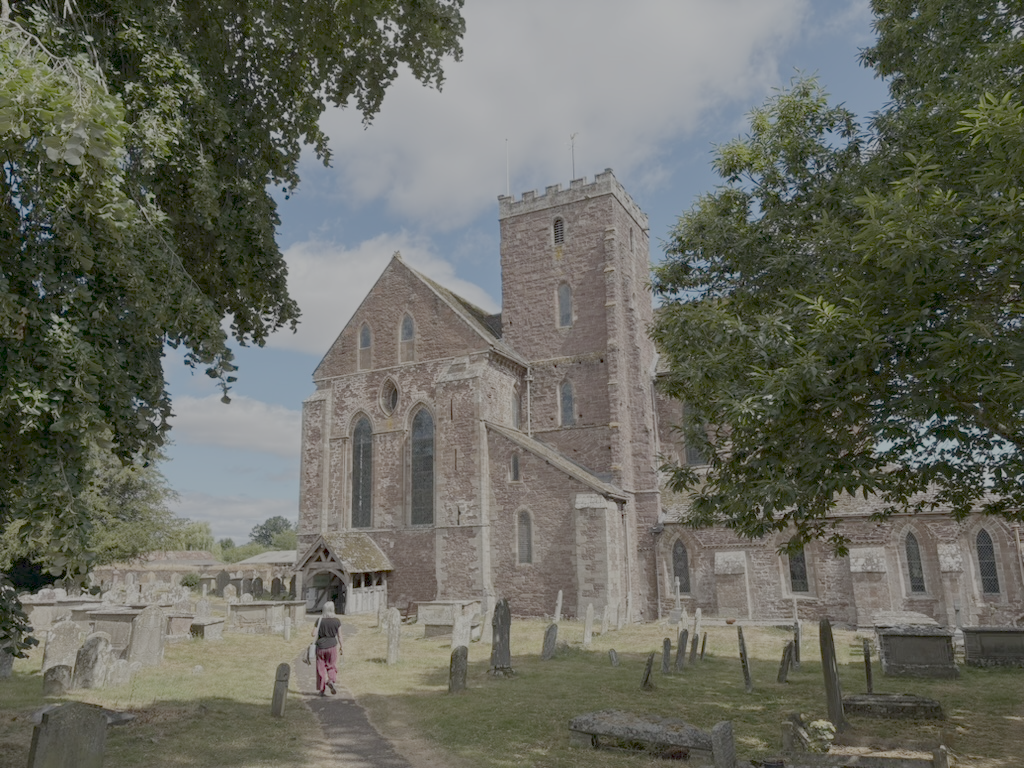
I gave up my seat for an exiled Scot, who recommended staying onboard until All Saints Church, a mile beyond the village. More serendipity! We spent some time in the churchyard, and as we were about to leave we learnt – from a notice at the lychgate – that the key was available from a nearby house, so we were able to get the stamp. From here, it was 2km to Belmont Abbey through maize fields, which reminded us of a few Hollywood chase scenes!
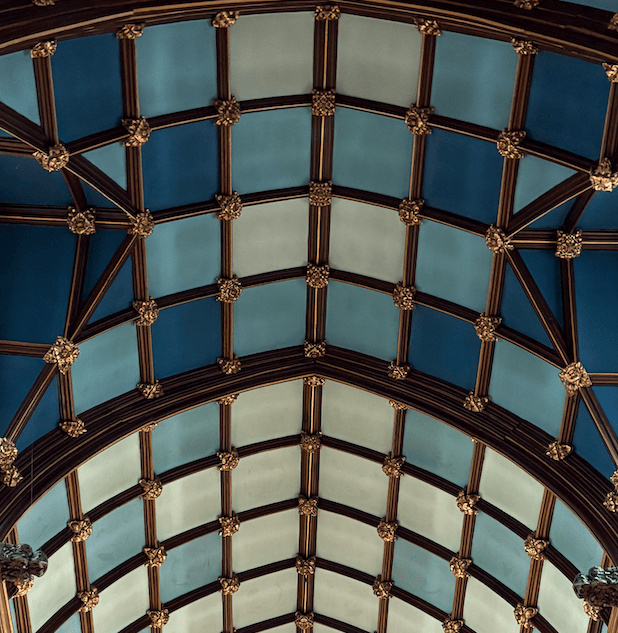
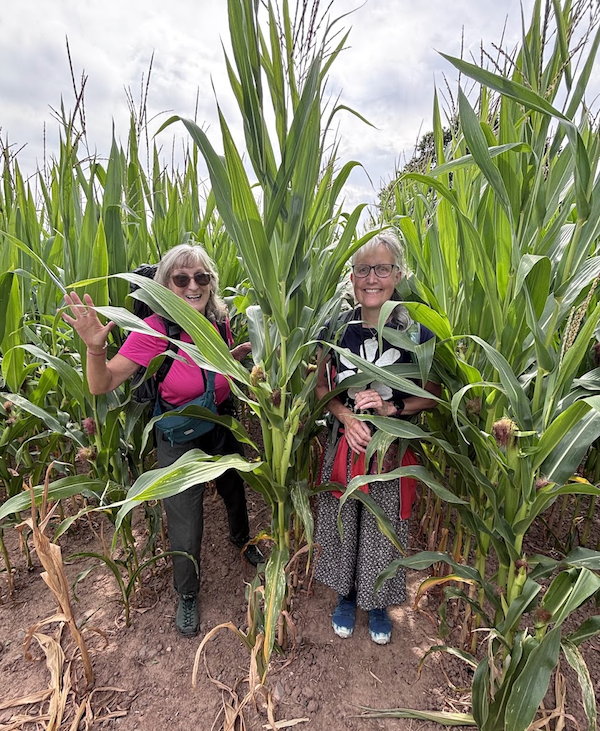
Within sight of the abbey, we saw our red kite again, and chatted to Sister Annalisa, a guest at Belmont who was out to pick blackberries. We looked round Saint Michael & All Angels at Belmont Abbey quickly, as a funeral was timetabled soon. The church was designed by Pugin’s eldest son, Edward Welby Pugin 1834–75.
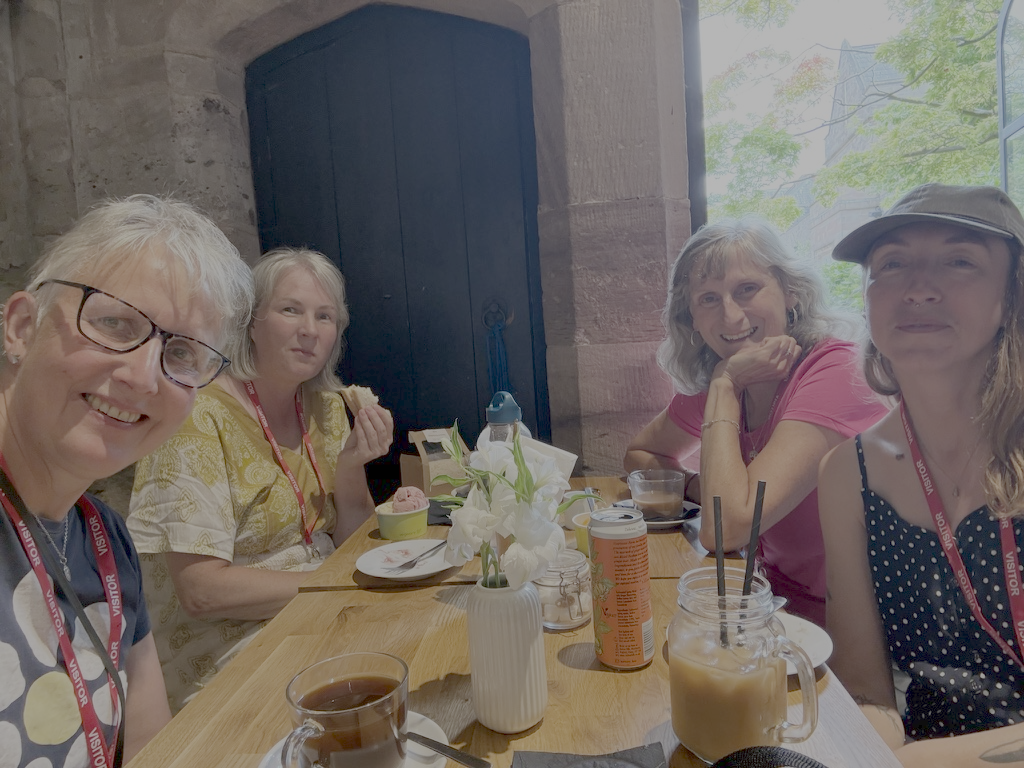
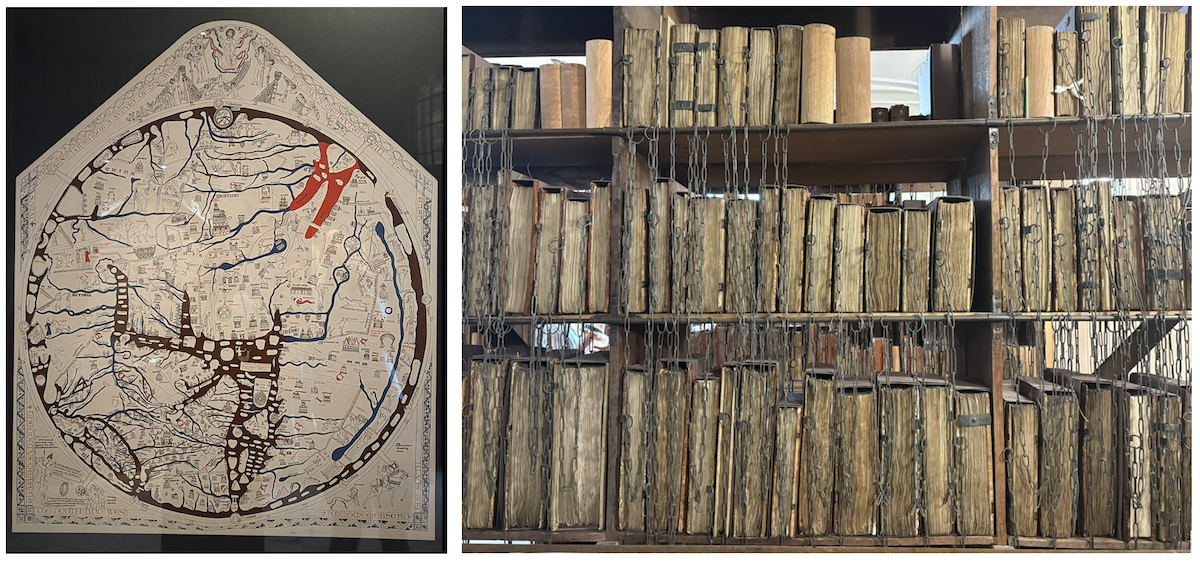
My fellow pilgrims had an extended lunch while I drove the car into Hereford with our packs, parked 5 minutes walk from the Cathedral and ran back to Belmont. We walked the 4km into Hereford, part of it along the Wye, arriving at 3pm. Like castaways from Desert Island Discs, we’d left “luxury items” in the car for our night in the cloisters, namely pillows and a clean outfit. We unloaded these and made our way to Hereford Cathedral, our final destination. The verger issued our guest lanyards, showed us to our cloister and we changed into fresh clothes to see the gems of the cathedral: the Mappa Mundi and the Medieval chained library. But first a celebratory cuppa in the café!
As an orienteer and generally interested in maps, I was excited to see the Mappa Mundi! It was drawn with a goose quill on calf skin, in around 1300, and is what’s called a T-O map, in which the Mediterranean is the upright of the T, and the Black Sea the top bar. Jerusalem is in the centre, and east is at the top. I guess the science of magnetism was in its infancy, and the guide told us that the map was created not as a navigation aid but for its ‘wow’ factor to awe an intrigue viewers. Sri Lanka (where there are dragons) sits in the middle of the inflamed tooth formed by the Red Sea and Persian Gulf. Britain and Ireland are diagonally opposite, near a drawing of the map-maker Richard Haldingham of Sleaford with an invocation to pray for his soul. He was canon of Lincoln Cathedral when he began the work in 1270, but completed it later at Hereford. Immortality indeed belongs to him.
That evening, we had pizza and wine at Leaven Pizza on Broad Street. So much to remember, and it wasn’t over yet. We had a night in the cloister to experience and the city to explore in the morning.
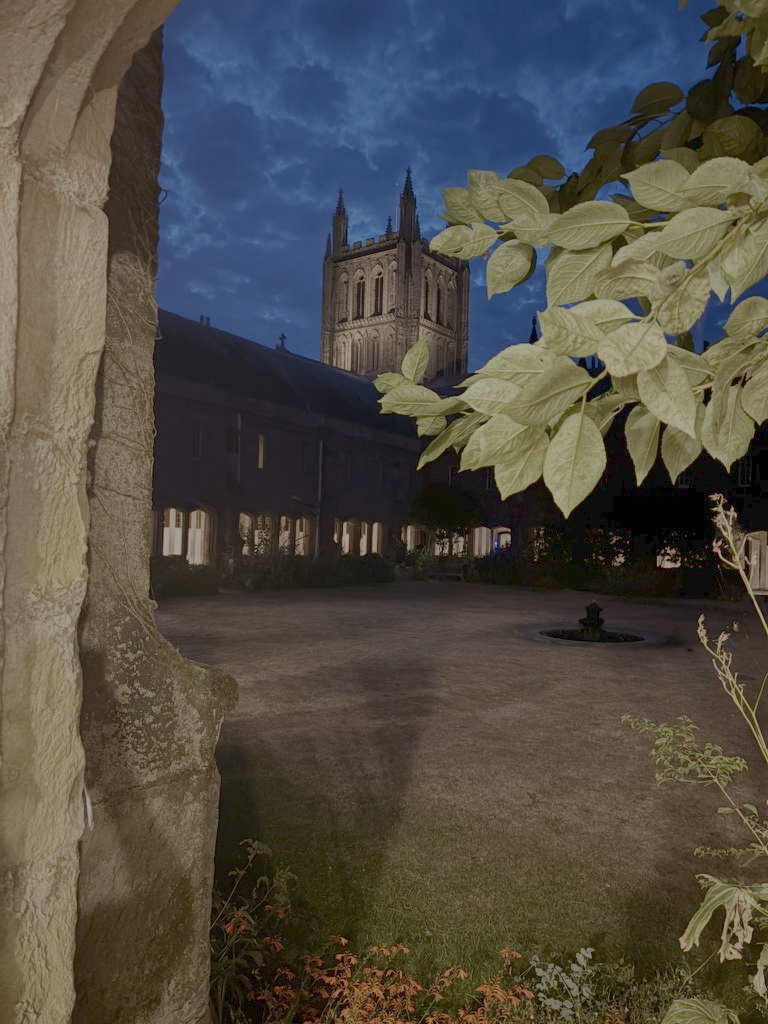
Day 7: In Hereford
My diary recalls breakfast as “an amazing toast with avocado, pumpkin seeds and chilli flakes that I must make at home” … and actually have done! We saught out the blue plaque to Alfred Watkins the discoverer of laylines, on the house he lived in for the last 10 years of his life, and helped rescue Maggie (a runaway terrier), who we left with a stone mason at work on the green.
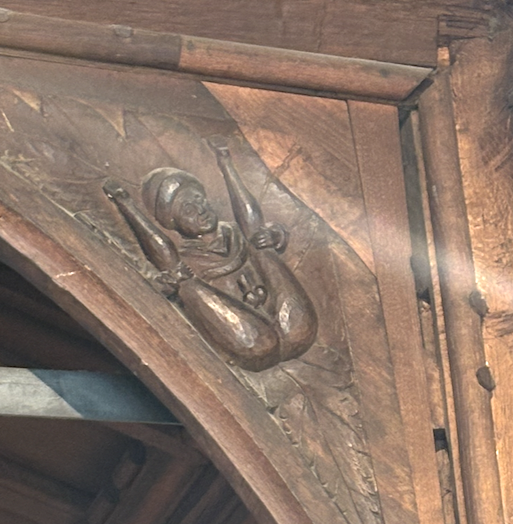
We split up for a couple of hours, and I had two churches on my list: All Saints, doubling as Bill’s Cafe where, high in the rafters, there was a carving of a monk exposing himself. Allegedly this was the building’s owner, who hadn’t paid the woodcarver! Difficult to find, but café regulars knowingly directed me to it.
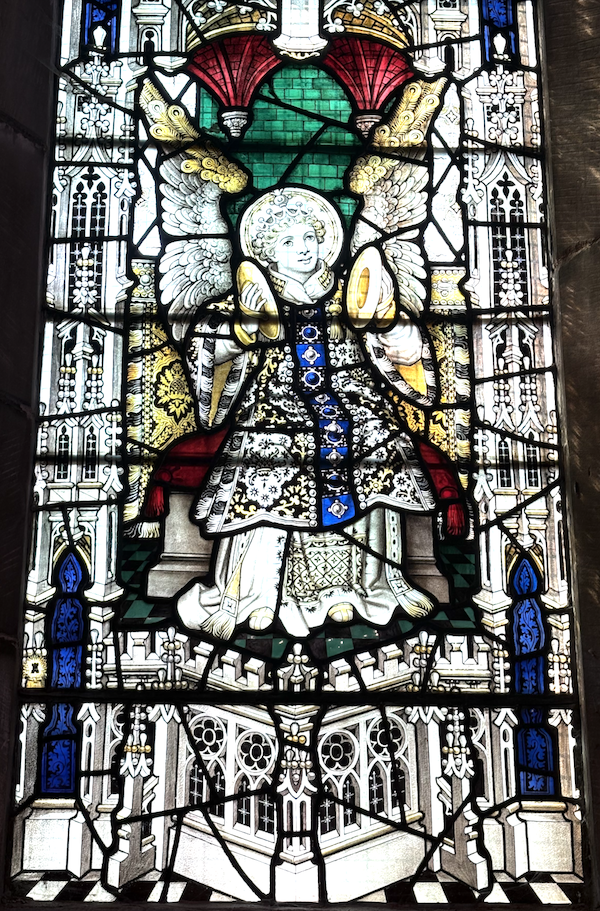
Second to hunt down was the peacock window by Charles Kemp in Saint Peter’s Church. Charles Kemp 1837–1907 was a Victorian stained glass artist, a speech impediment having prevented him becoming a priest. He designed and installed windows throughout the country, including locally (to Derbyshire) at Saint Mary Magdalene Church (Hucknall; the church where Lord Byron’s body was interred in the family vault in 1824), and Southwell Minster.
We met at the car at noon, and were home by 4pm. We all had the most amazing time, and felt so grateful to have been able to explore this quiet corner of border country that is the Golden Valley.
Photo credits to Julie Swindel (Pilgrim Wild Rose), Sue Bolshaw (Pilgrim Thistledown) and Tara Bennett (Pilgrim Bindweed). Some are my own (Pilgrim Bullrush).
Places still to visit in Herefordshire
Saint Faith’s Church, Bacton
We heard this story two or three times from locals: the altar cloth at Bacton Church had been turned over, and when inspected in 2015, was found to be a piece of one of Elizabeth I’s dresses (matched to a contemporary painting). It is now at Hampton Court and is the largest piece of Medieval fabric in existence. It’s thought that the piece was donated to the church by Elizabeth in memory of Blanche Parry who had served as her most trusted person maid for 56 years and who was born at Bacton. See below for a fictional account of Blanche’s life.
St Mary and St David Church, Kilpeck
Close to our route, a Romanesque church in which there’s a green man and a sheelanagig.
Moccas Church
Access wasn’t allowed from the side of our approach, but this Norman family chapel is easily visited from the other direction by car.
Snodhill Castle
Ruined 10th century castle, just a little bit off our route.
St Issui Church over in the Black Mountains, Wales
Jules was recommended this church, which opted when the Church of Wales split with the Church of England in 1920 to stay in the Diocese of Hereford.
Craswell Church – we stayed at Cloddock instead.
Saint Catherine’s Church, Hoarwithy
John Pollard Seddon’s huge Italianate church built between 1872 and 1885 on the site of an earlier chapel. Harry Hems’ Saint Dubricius carvings are here, which in turn inspired Edward Kelly, the artist we met at Madley.
Further reading and listening
Secret Herefordshire podcasts – 10-minute episodes on quirky aspects of Herefordshire history, ancients and modern.
Mistress Blanche: Queen Elizabeth I’s Confidante (2008) Ruth E. Richardson.















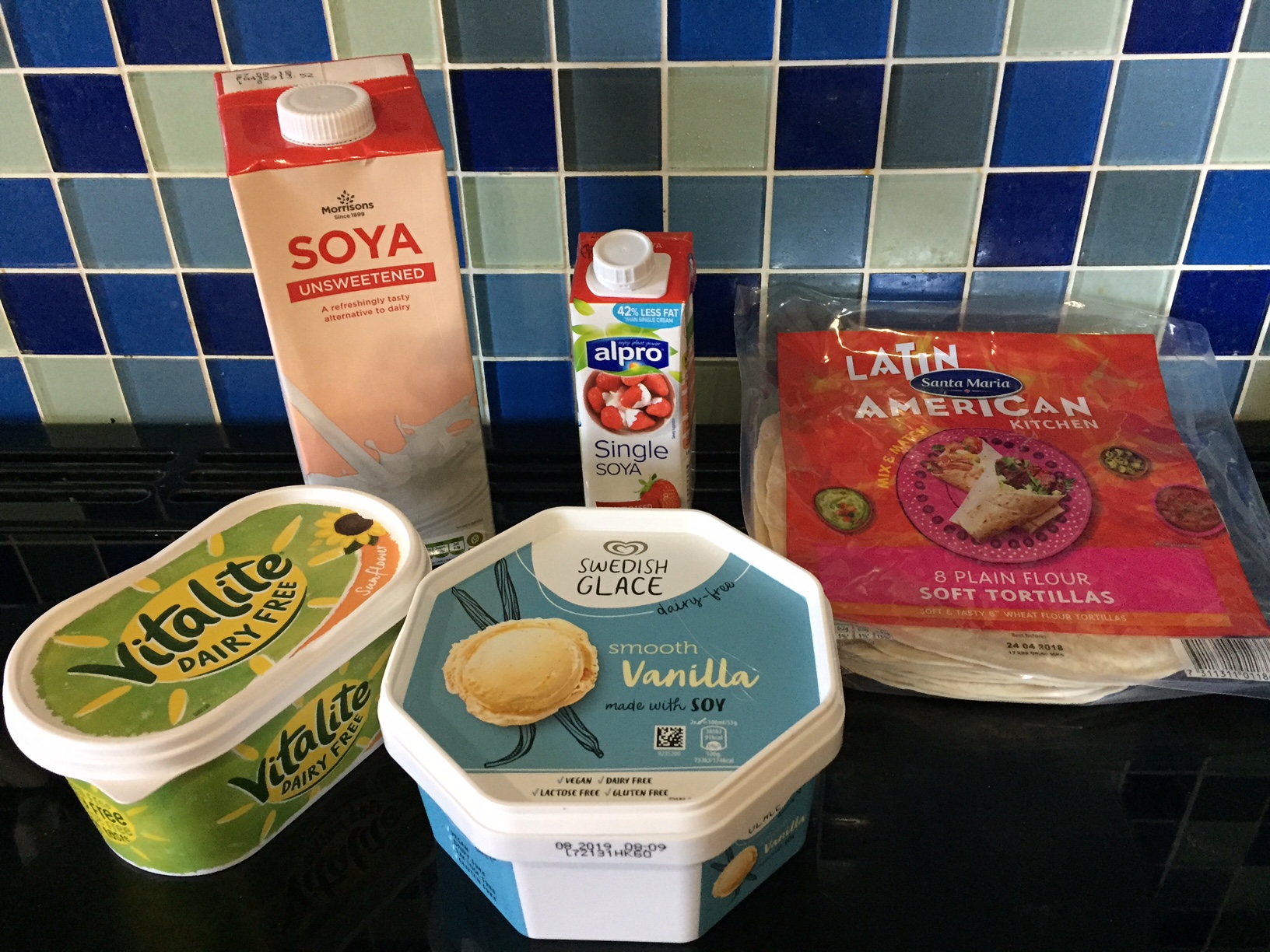
 I did double quantity of my
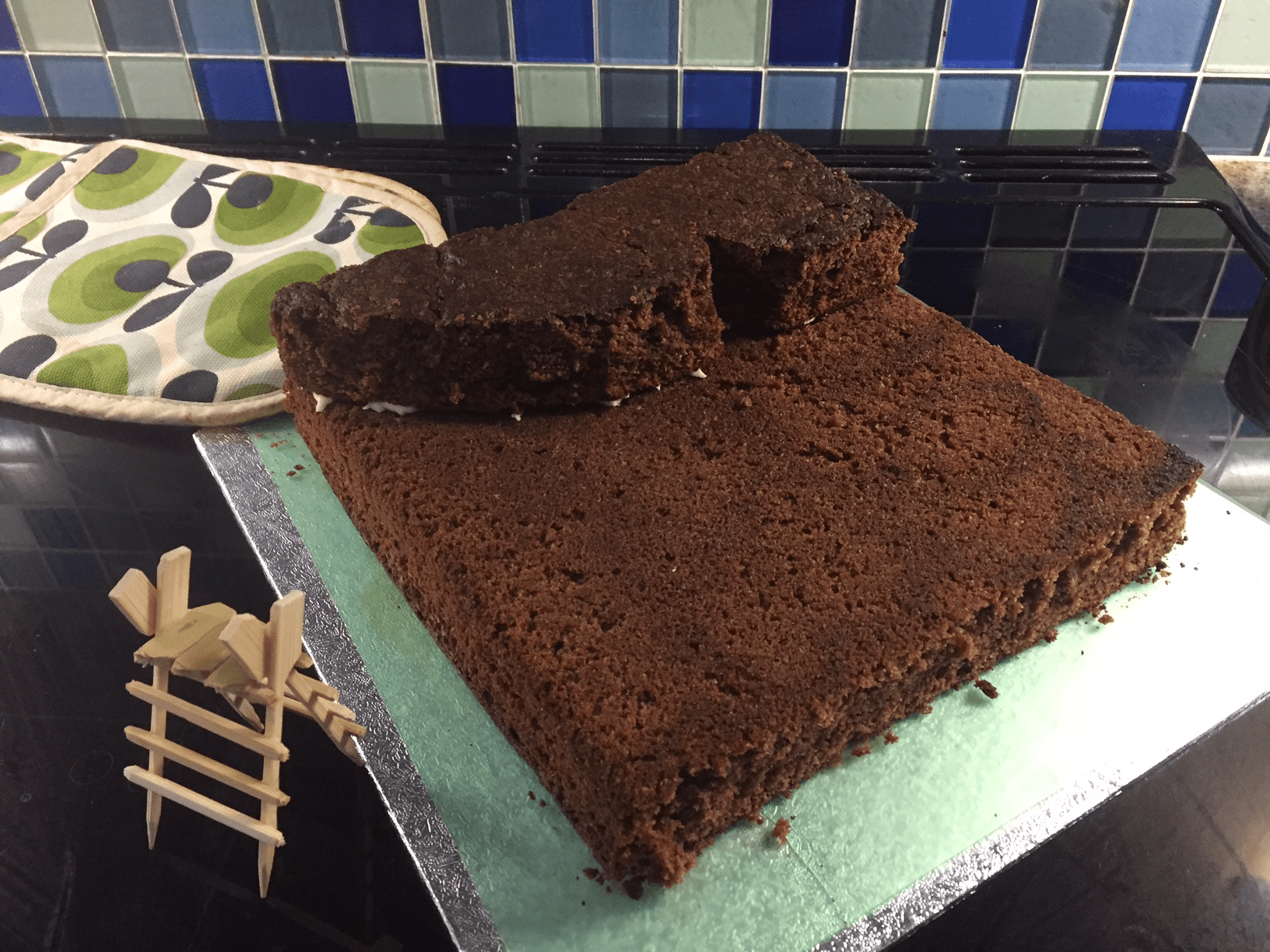
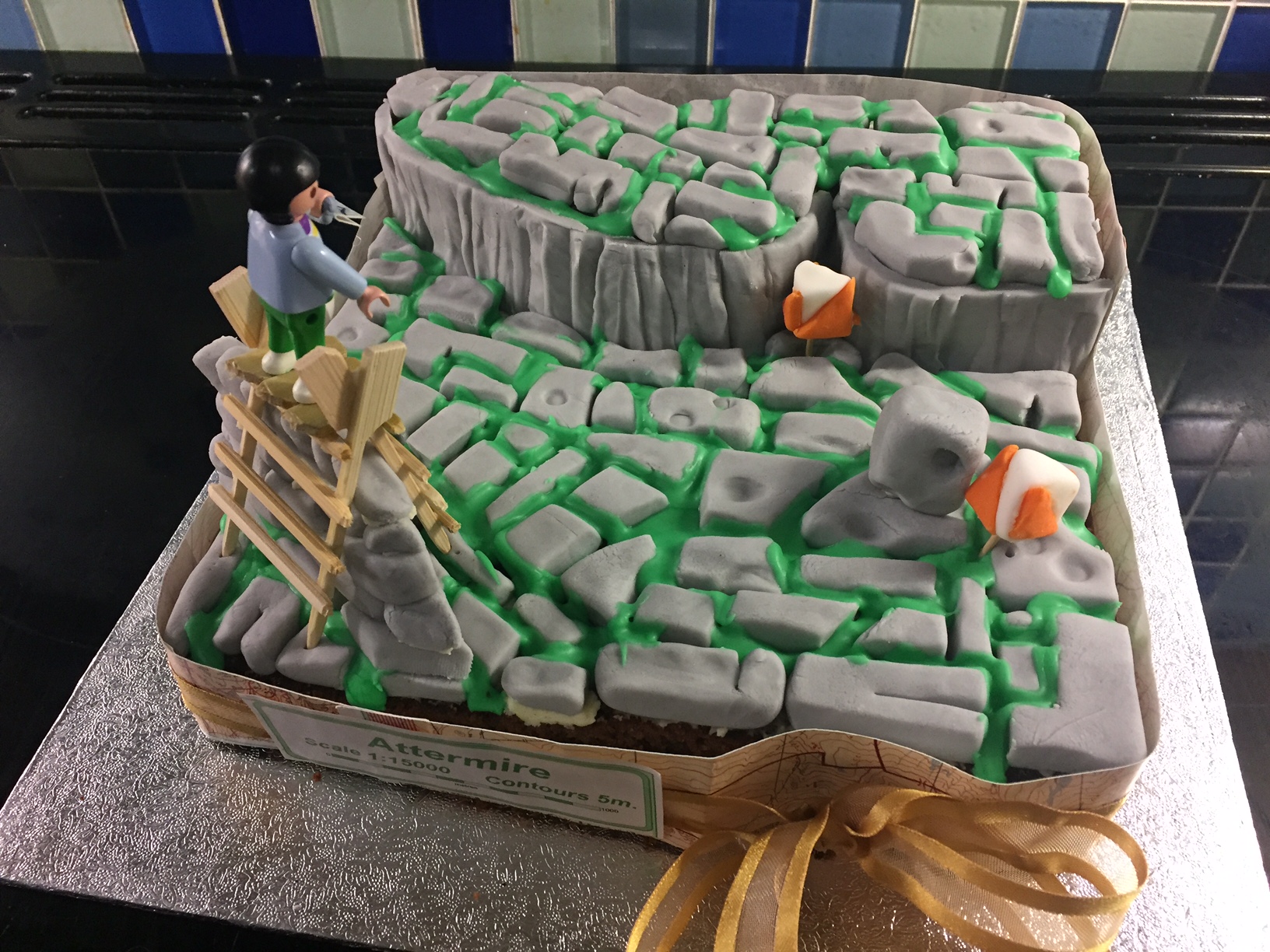
 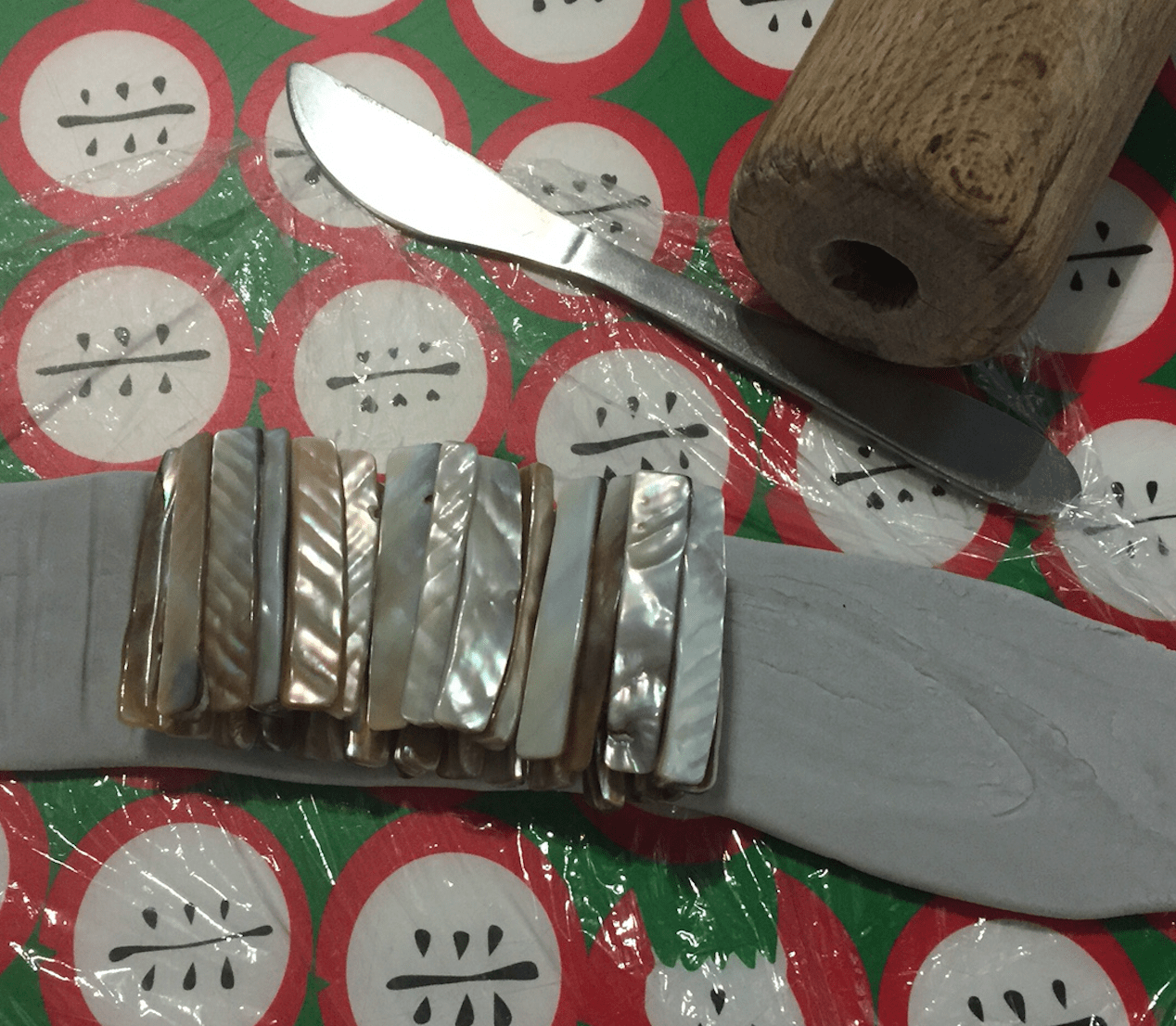 I made the limestone blocks in mainly rectangular shapes, but started with a triangle formation, so that there was some randomness. I put a thin layer of butter icing to hold them in place, then piped the green into the gaps afterwards. You could put the rocks directly onto the green icing, but you would need to have made them all first, otherwise the icing would dry.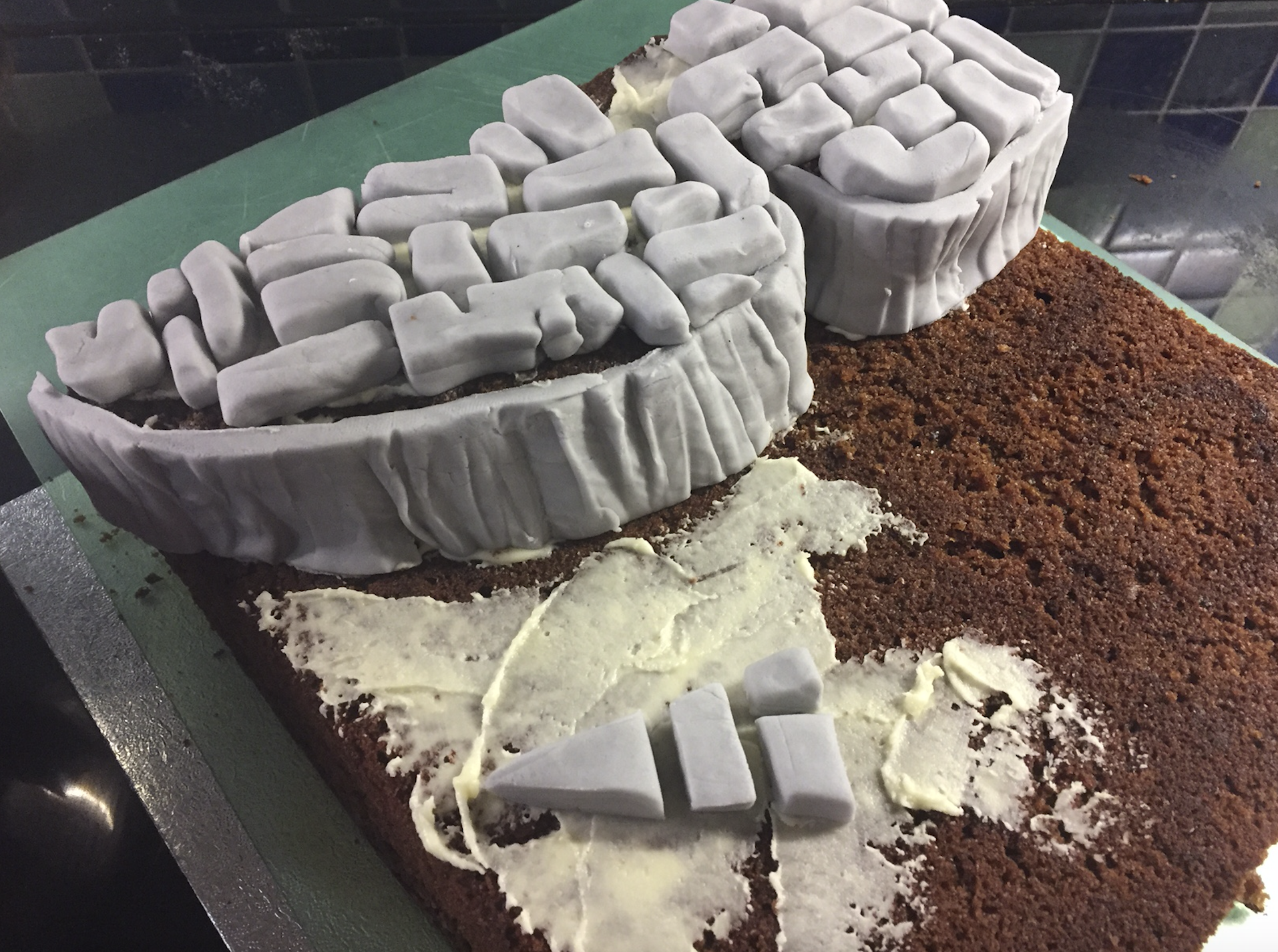
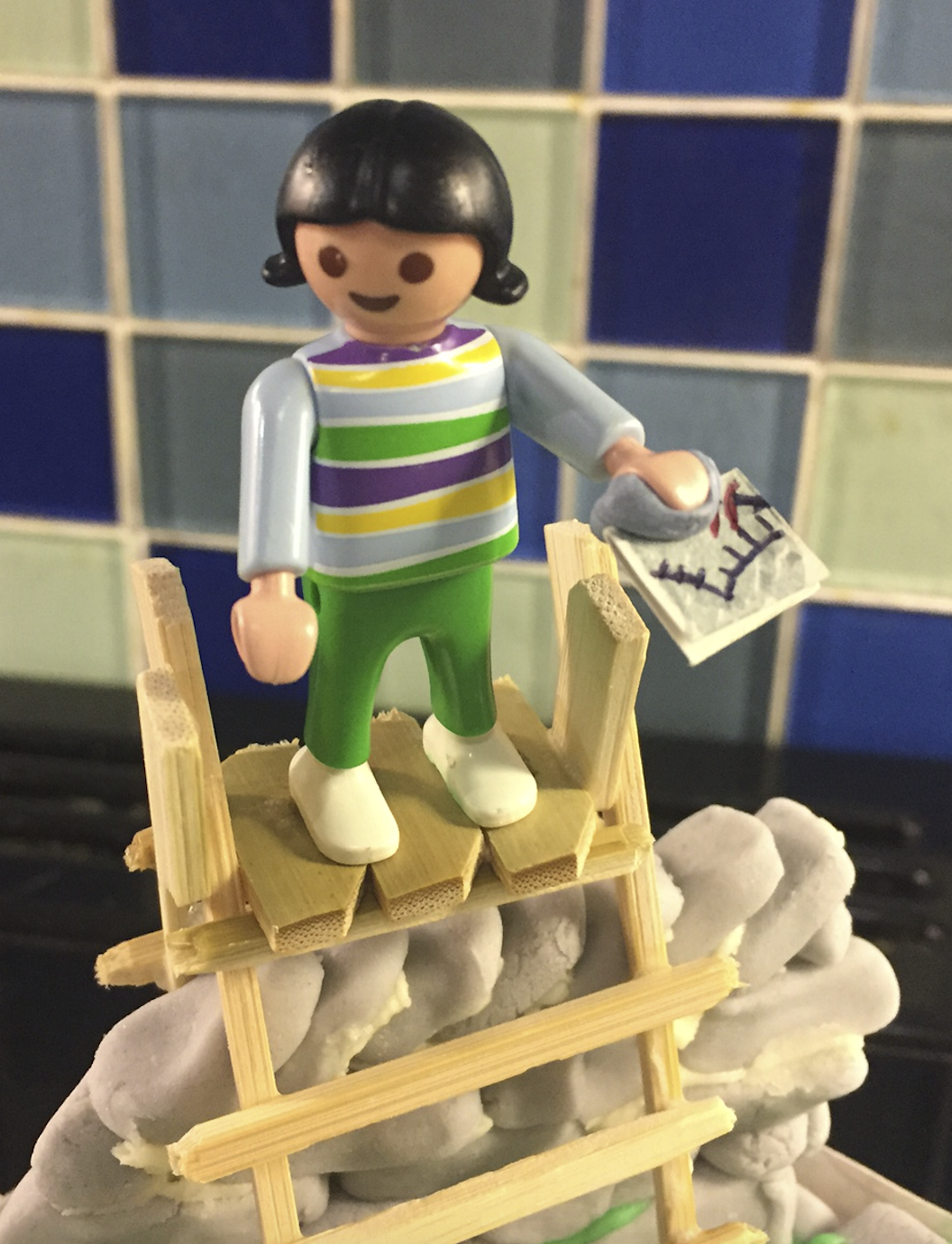 The wall was held together with butter icing, and finished with an authentic layer of coping stones. I butchered some old maps to cover up the edges and found a Playmobil man that looked a bit like Dave and even made him a tiny map!
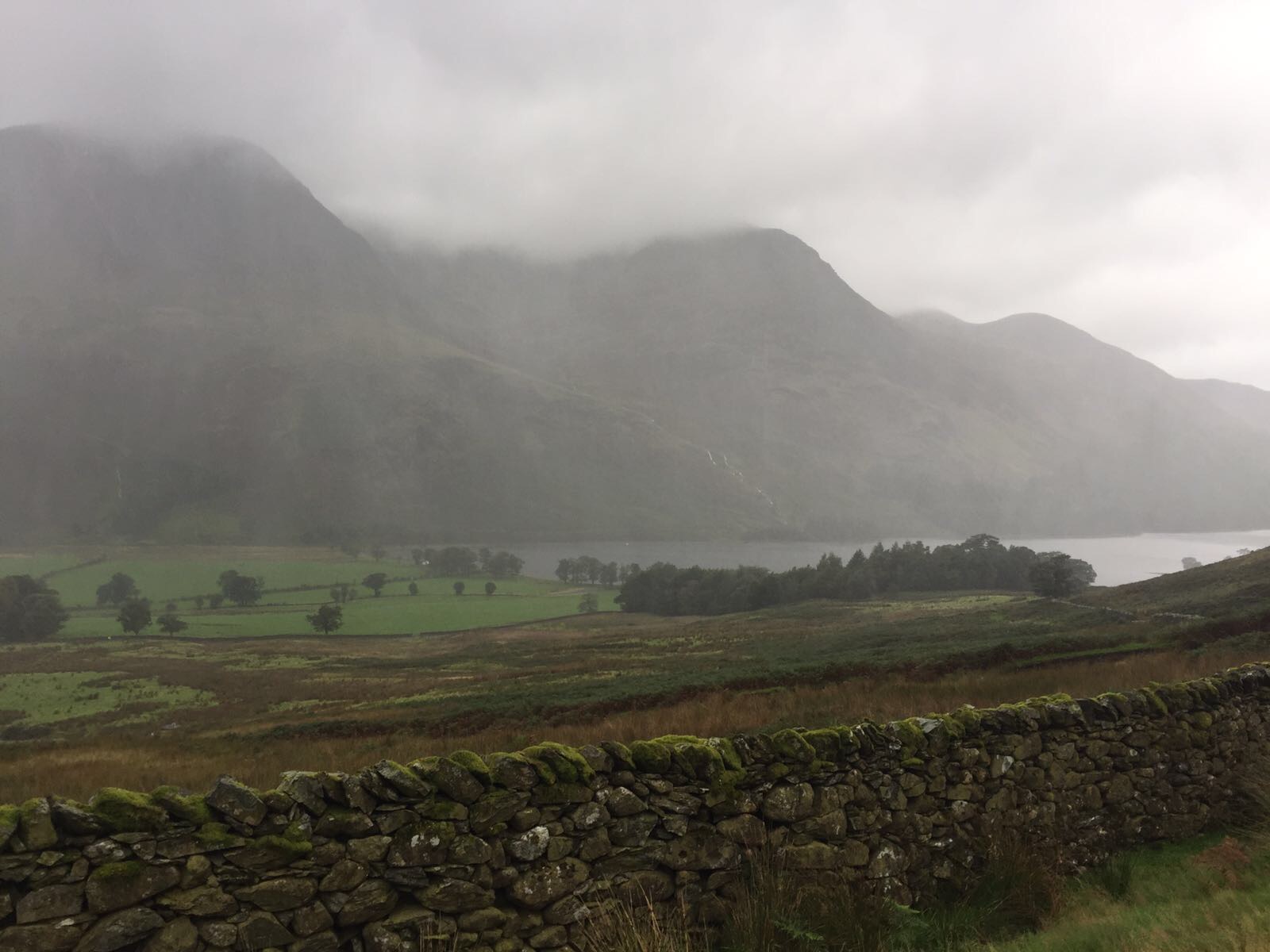
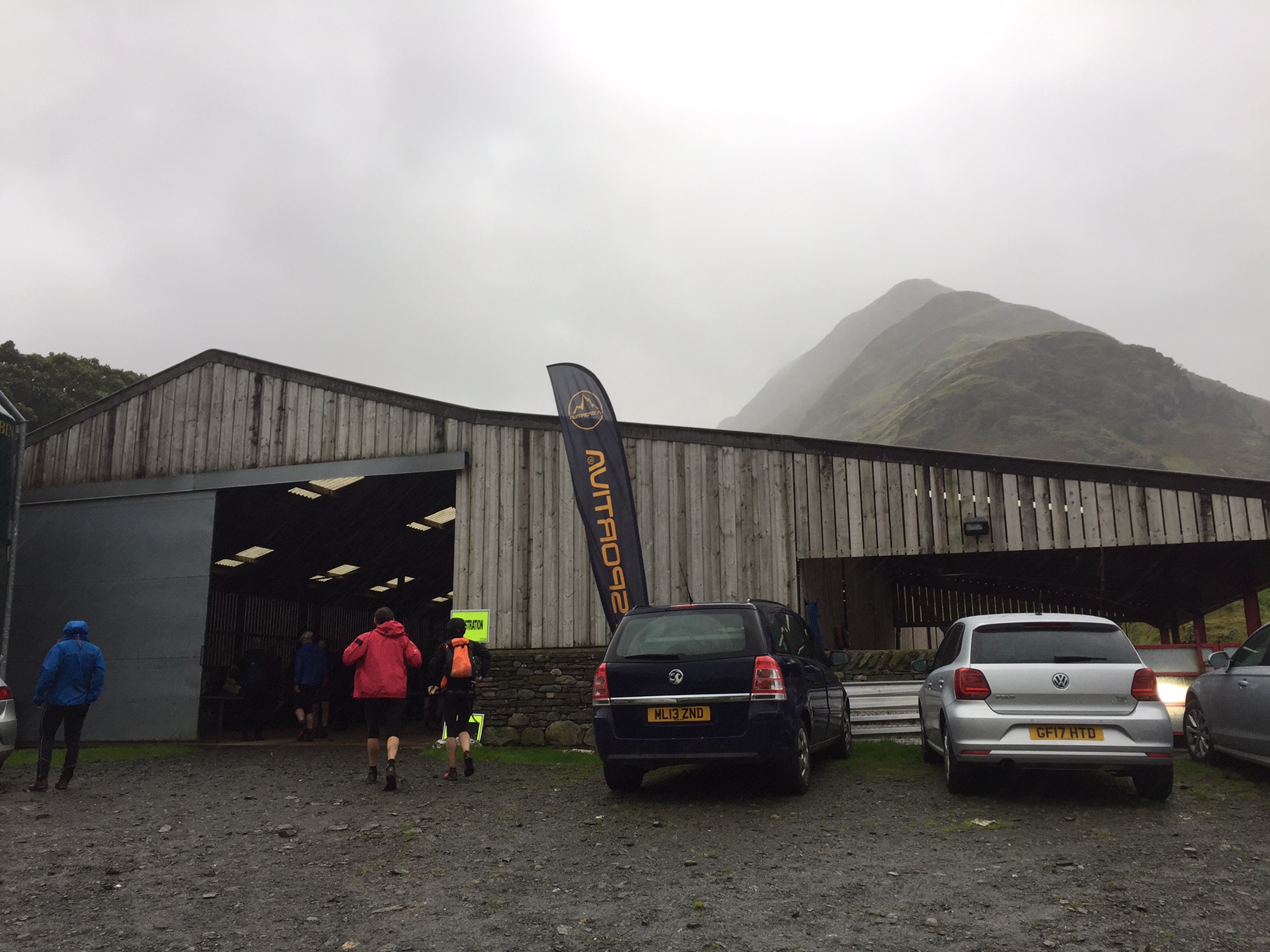
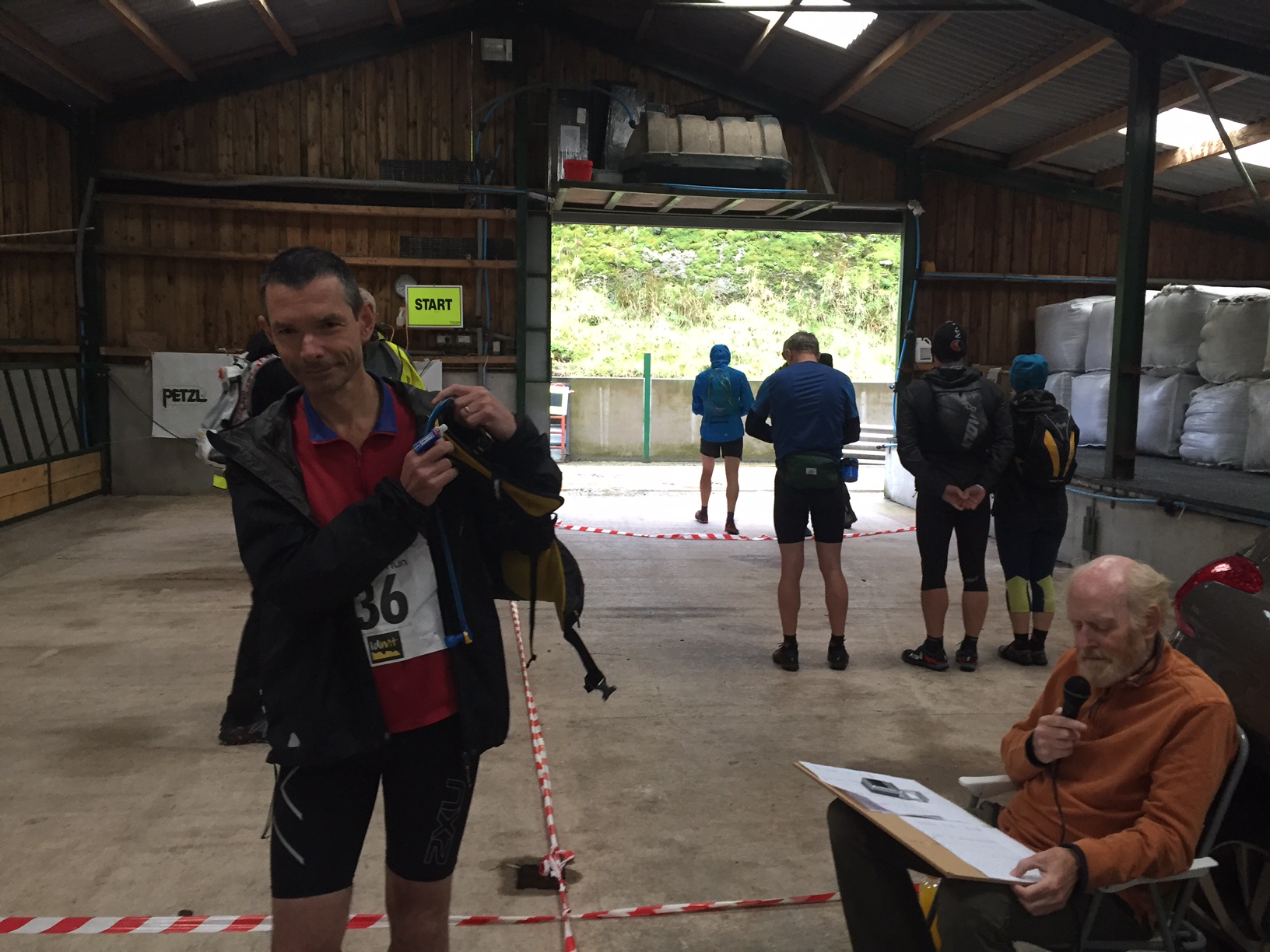

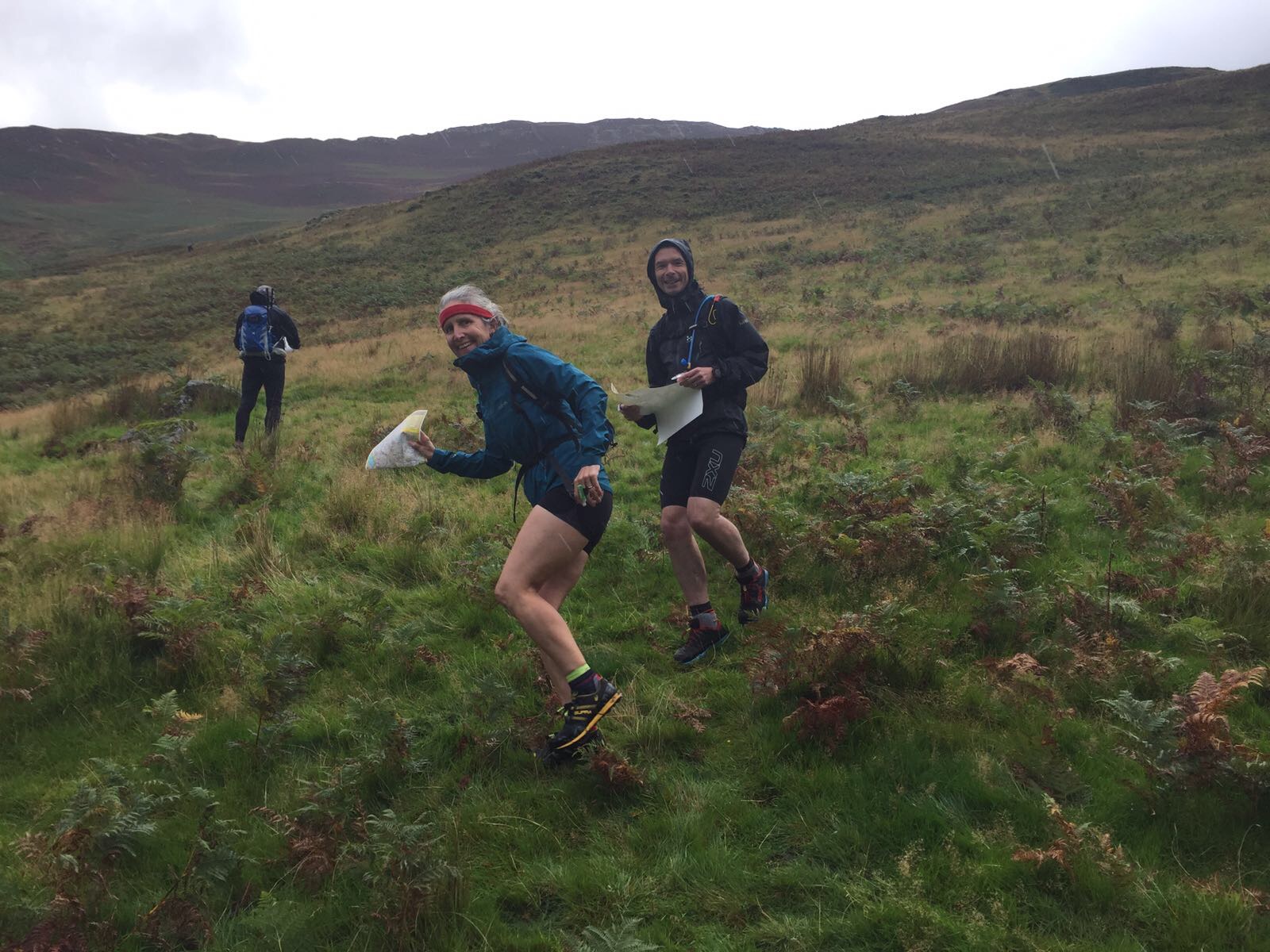
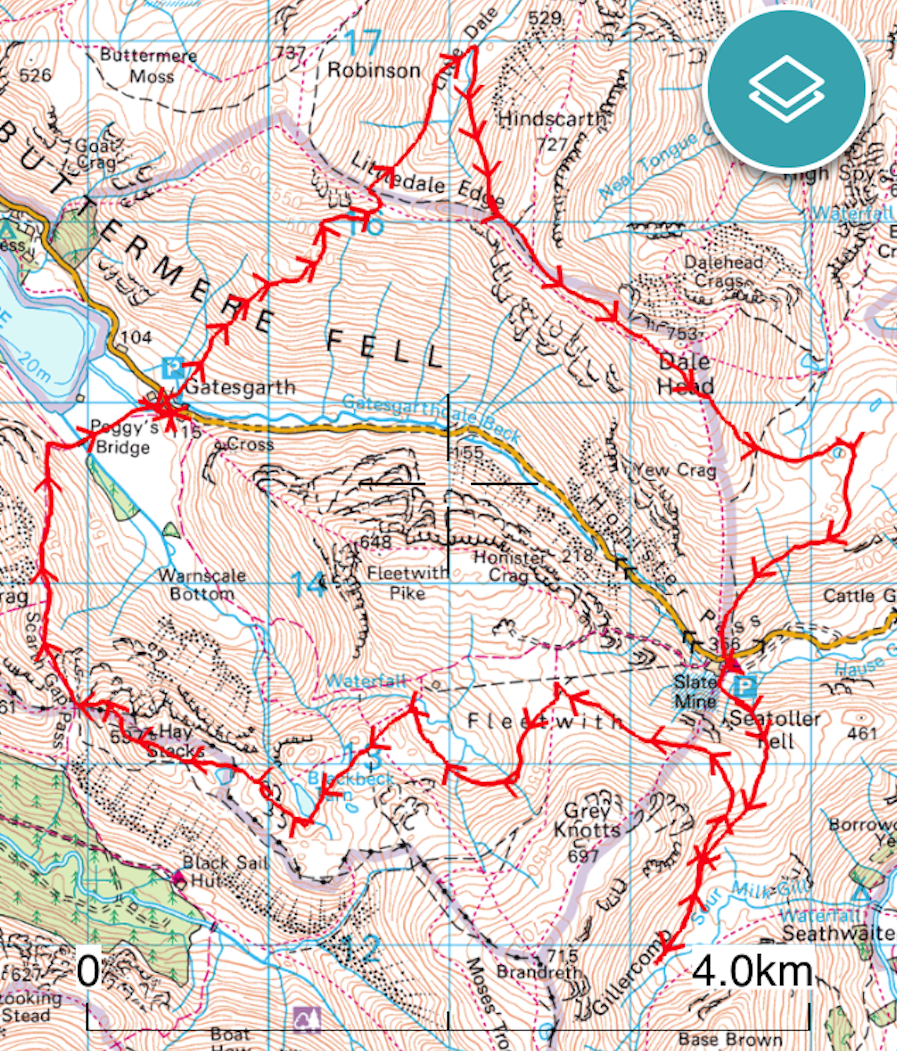
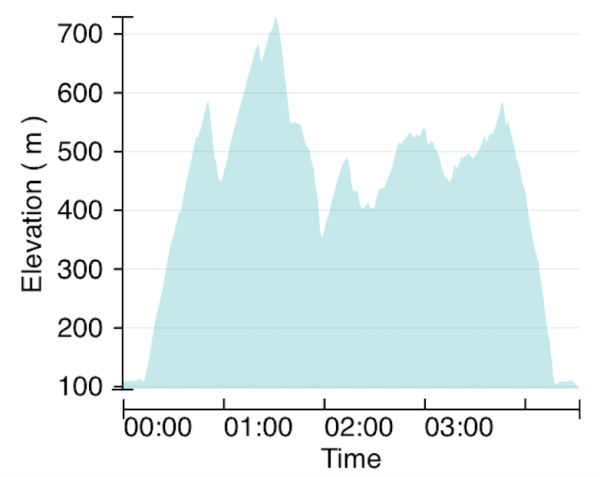 Our strategy to No 5 (south end of Blackbeck Tarn) was to contour then climb, as the GPS trace above doesn’t show the crags that were on our race map. We took a bit of a duff –but safe – route choice to No 6 via the tourist path over Haystacks, which was quite rocky, so we lost a bit of time here, as some rivals got to Scarth Gap before us. Then it was a quick descent back to Gatesgarth Farm, finishing in 4 hrs and 8 mins. Actual distance was 19.4 km (compared with 14.5 straight line) and 1347m climb (exactly as advertised). Altitude profile above, showing the dip at 2 hrs when we crossed the road at the top of Honister Pass.