After 2 years of prep and a flurry of excitement in late March, now it’s time to reflect on DVO’s staging of the JK Relays on Easter Monday. It’s always useful to write things down, not least for next year’s event officials!
The club has organised quite a bit at national level recently, such as British Middles and CompassSport Cup Finals. The JK – and particularly the Relays – are different, in that they’re the last day in a multi-day event, so need some central coordination. For instance, there’s an Entries Team, a Prize-giving Team, a non-SI Equipment Officer, an SI Equipment Officer, a Safety Officer and a Treasurer for the whole weekend – all under the auspices of Andrew Yeates (Walton Chasers), the very capable and ever-patient Weekend Coordinator.
Our Relay Planner John Duckworth elected early on to use DVO’s SI boxes rather than sourcing via Central Team; a simpler arrangement as the club has plenty. We were guided by Andrew Leaney of SportIdent UK who provided laptops, generator and a couple of troubleshooting staff, with DVO finding volunteers to staff Download.
We were unable to age our first choice of arena, for conservation reasons, but the area John chose was compact and made for a great atmosphere. The handover and arena run-through were a great spectacle, and car parking was directly across the road.
The team entry fee was £75, but one advantage of working with the Central Team is shared procurement, for instance the marquees, loos and track matting were sourced from the same 3 companies for the Beaudesert days and the Relays. We had 300m of trackmatting, and this was expensive but essential after the rainy winter and spring.
Organisation
We decided to split the organisation so that Sal worked with Central Team (and the 3 contractors), the landowner / farmer, and the traders, and Viv worked with the DVO Team Leaders in fine-tuning the volunteer requirements for the day. She also masterminded equipment loan from neighbour clubs. We had a site meeting in the autumn, and an indoor meeting 3 weeks before the event with officials, Central Team and DVO Team Leaders. There, we did a PowerPoint based on the arena diagram and taked everyone through Call-up, Start, Handover and Download. Not all our Team Leaders had run in Relays before, so this was essential and reassuring.
Early milestones were agreeing an access fee, gathering permissions and discussing parking. The first draft of the Programme was published in December, which forces you to formalise things but always with room for change as we went through 6 versions as the weekend got closer.
Three weeks before the event, we had a map-folding party at John’s house. He had masterminded a system using ConDes, where the maps were folded in quarters and sealed with a red, white or blue label according to leg order. On the reverse was printed Team number, Leg number and Relay class, e.g. 80015–2, P Mixed Ad-hoc.
We printed 3 spare map sets for each class, and 10 spare map sets for Mixed Ad-hoc, as we wanted to offer entry-on-the-day for scratch teams, or teams in other classes where a member had been injured over the weekend. And we printed an unascribed map set with only gaffle info, in case we needed any extra maps.
So we had 1100 maps to collate, fold and arrange in team order in empty champagne boxes. This took 8 people some 5 hours and several production lines to accomplish, but the advantage was that our Controller, Simon Thompson (Harlequins), attended and was able to check the maps and our processes, and sign off each map box.
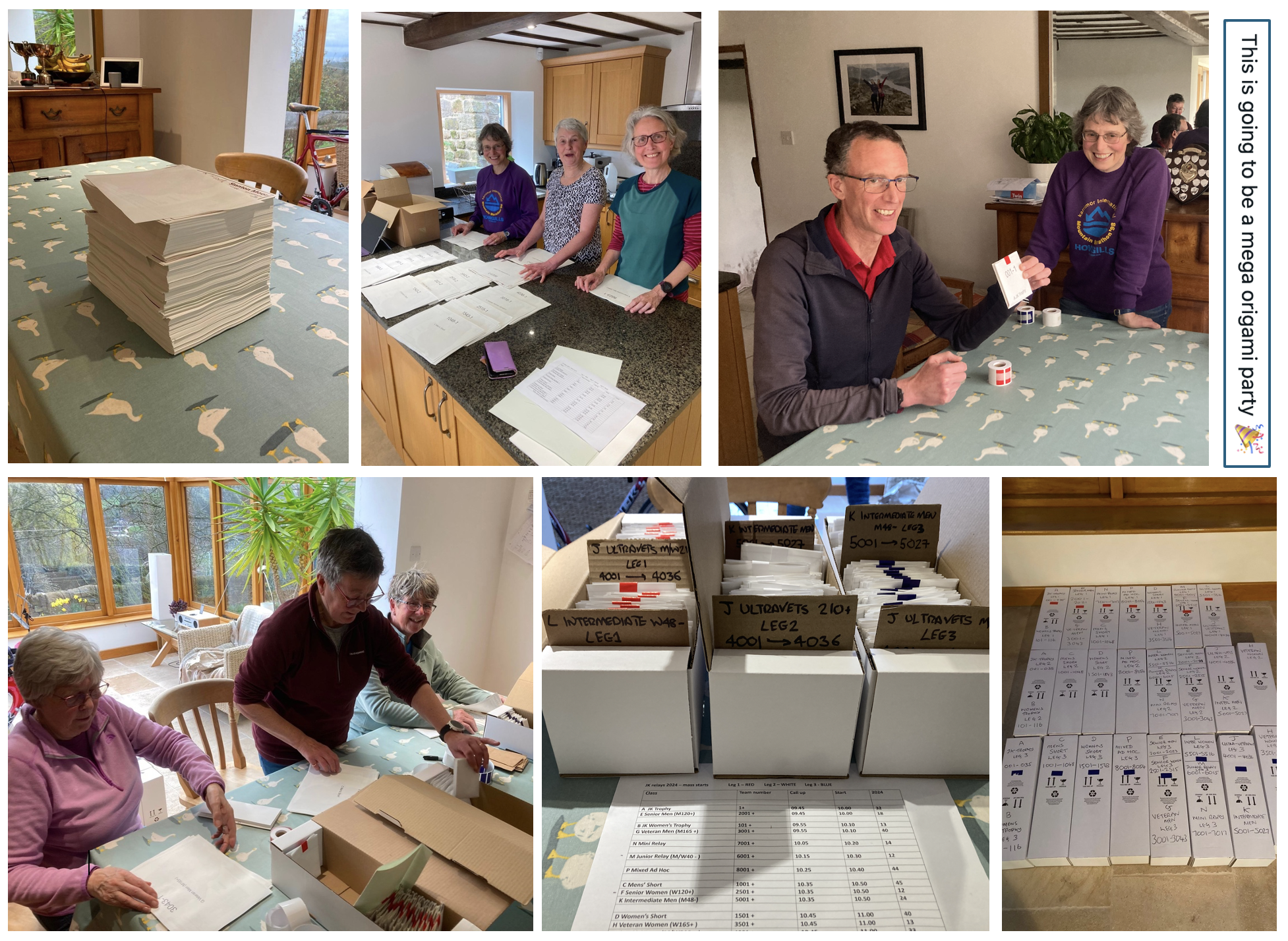
Bib printing was organised by Central Team, and bibs arrived 5 days before the event, a little bit tight for comfort and I made several phone calls to ensure the printers had my correct address. We had a bib-collating-and-enveloping party, where pins were added and Team envelopes were put into Team bags. SportIdent provided labels for the 360 envelopes and we labelled the carrier bags alphabetically with marker pen. A duplicate set of bags was needed for Map Collection after Download. Again this took 6 people some 4 hours and a lot of biscuits.

I was relieved when race weekend finally came, as it was fun to do the Sprints and Middle Distance. After the Sprints, we went up to the Arena to meet the mobile toilet contractors and expedite the draining of a large puddle at the parking field entrance [note to self: order 3 tonnes of gravel next time].
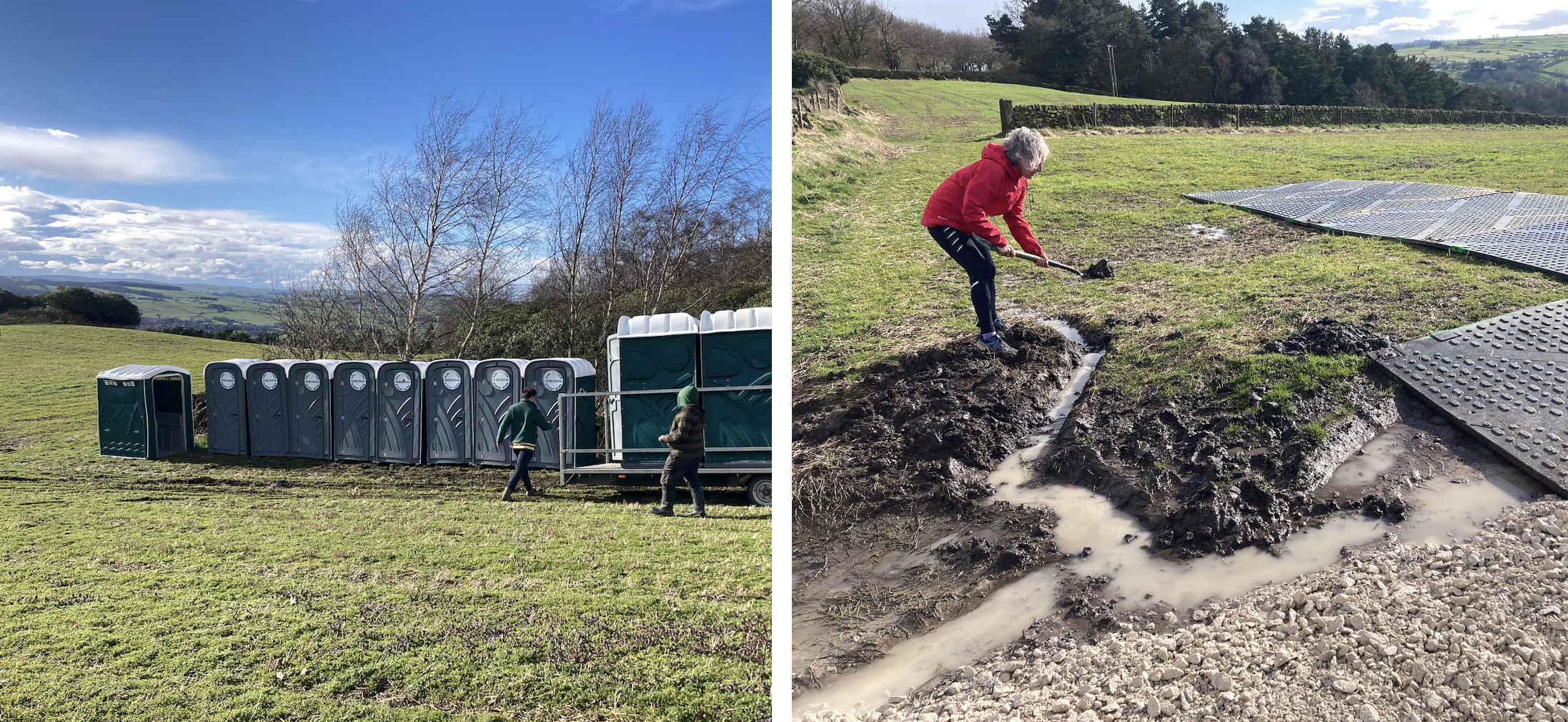
Sunday we spent prepping the arena, which required 400 stakes and about 2km of red and white tape. We remembered to leave a route for the Commentary Trailer to drive into their assigned place at the heart of the operation!

John had put temporary stiles out on the Saturday, so he was available to check out layout after he had put out the controls. The only potential issue was, would String Course parents gain an unfair advantage by seeing the control at the end of the arena run-through? But in the end, it wasn’t visible, so all was well. However, it nicely illustrates fairness considerations we’d not considered!
Another thing I’d not fully appreciated was the scale of the prize-giving operations. There are 14 classes x 2 genders x 3 per team = a LOT of mementos! Fortunately it had its own ‘Ministry’ in the shape of Judith holt and her Team.
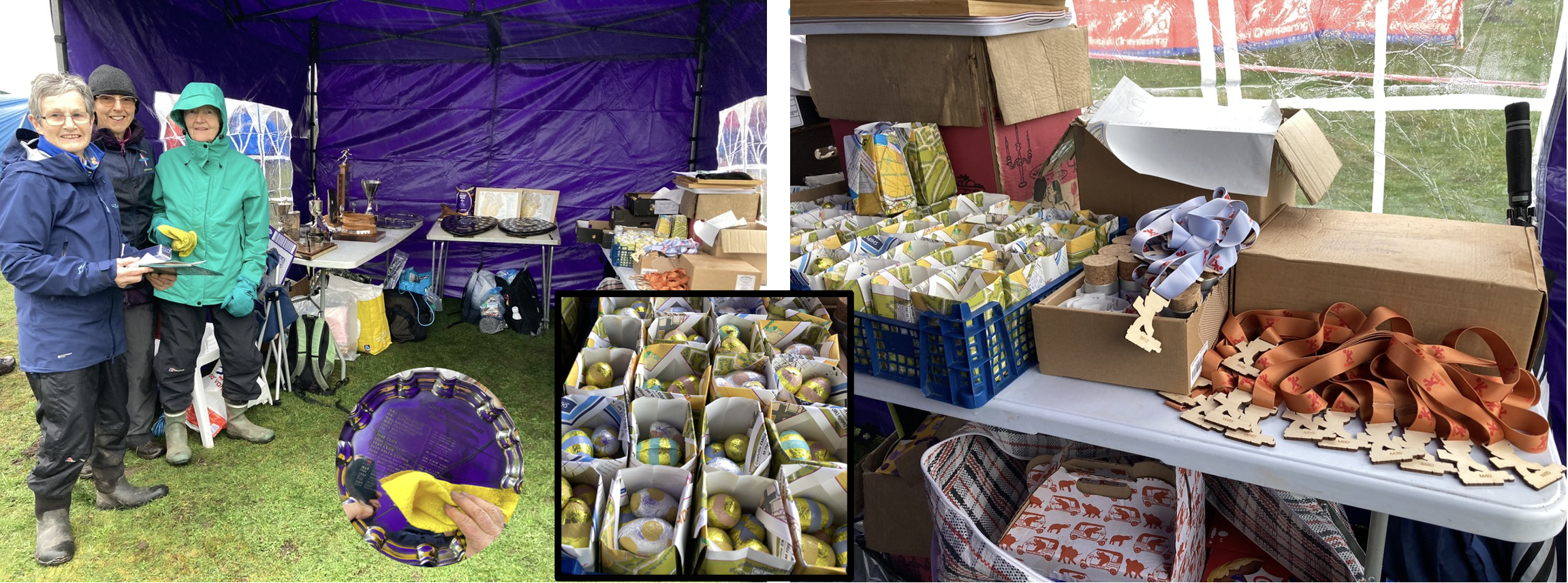
The marquees weren’t insured overnight, so 2 groups in camper vans agreed to sleep over and act as site security for two nights. We liaised with three local parish councils and put up signs on the Moor explaining what was happening. Road signs were put out and the parking areas taped and staked by our Traffic Team.

We convened at 7am on race day, the first job being welcoming and siting traders. Maps were unloaded, arena signs were put up and volunteers briefed. It was exciting to watch runners arriving and the arena filling with club tents.
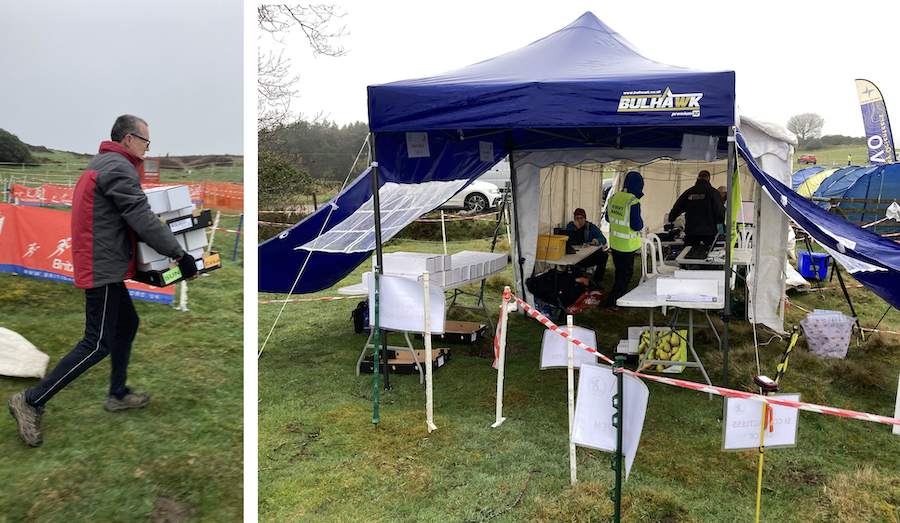
Soon it was 9:45 and time for the first call-up and Mass start. It was great to have the Commentary Team managing the many call-ups, and we knew that they could announce any delays and other notices if needs be. A sigh of relief and some time to enjoy the spectacle before meeting the landowner at noon and watching the Prize-giving.

DVO had decided not to enter any adult teams, and this was definitely a good call, as many of our volunteers did a few different jobs as the day progressed! For instance, post-race Map Collection didn’t need to be manned until 10:15, so those helpers were deployed elsewhere beforehand.
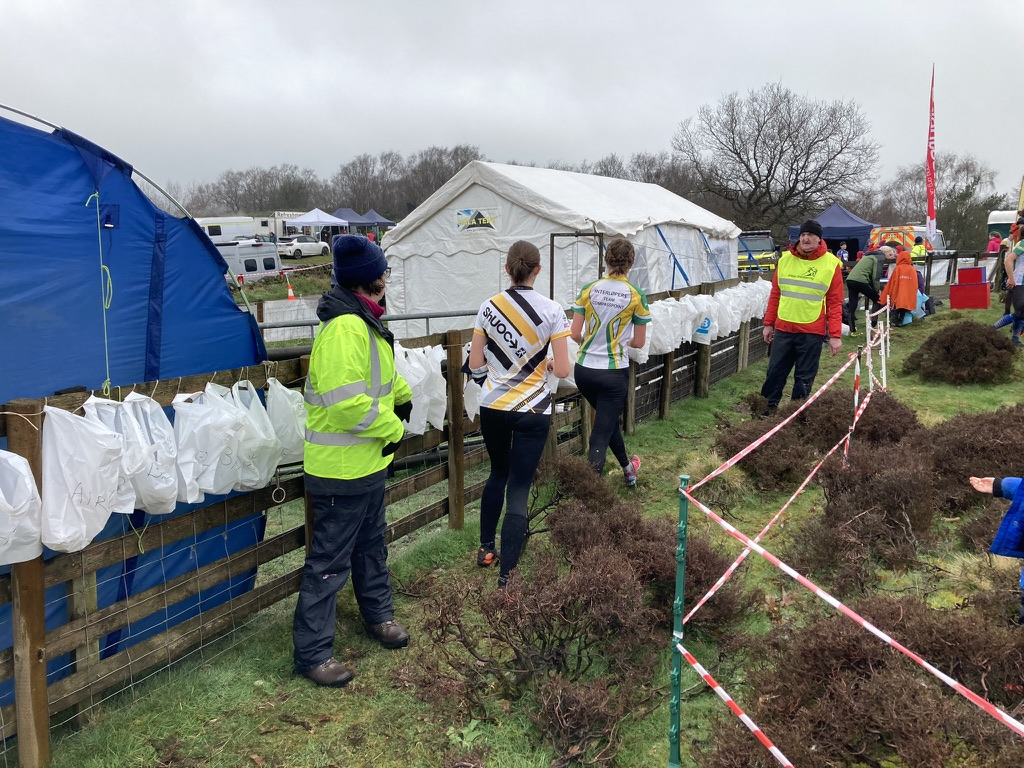
We had an East Midlands team in the Mini Relay, originally named the Flying Childers after a famous racehorse and pub in Stanton-in-Peak, but maybe naming your junior girls’ team after a pub doesn’t quite give the right message – so they were re-named the East Midlands Flyers! Great to see everyone in their club kit, facepaint and stripy socks that could have been from the 1970s.

As well as things like Crossing Marshalls and Close-finish Monitor, there are some jobs specific to Relays such as Fork Marshall, so at peak times, the volunteer load is quite high!

It’s a requirement to offer a Maze or a String Course, and we offered a Lion King themed String Course, designed by Alice Powell and her dad Andrew. We used SI punching, and there were a lot of takers, but not until after the main race.
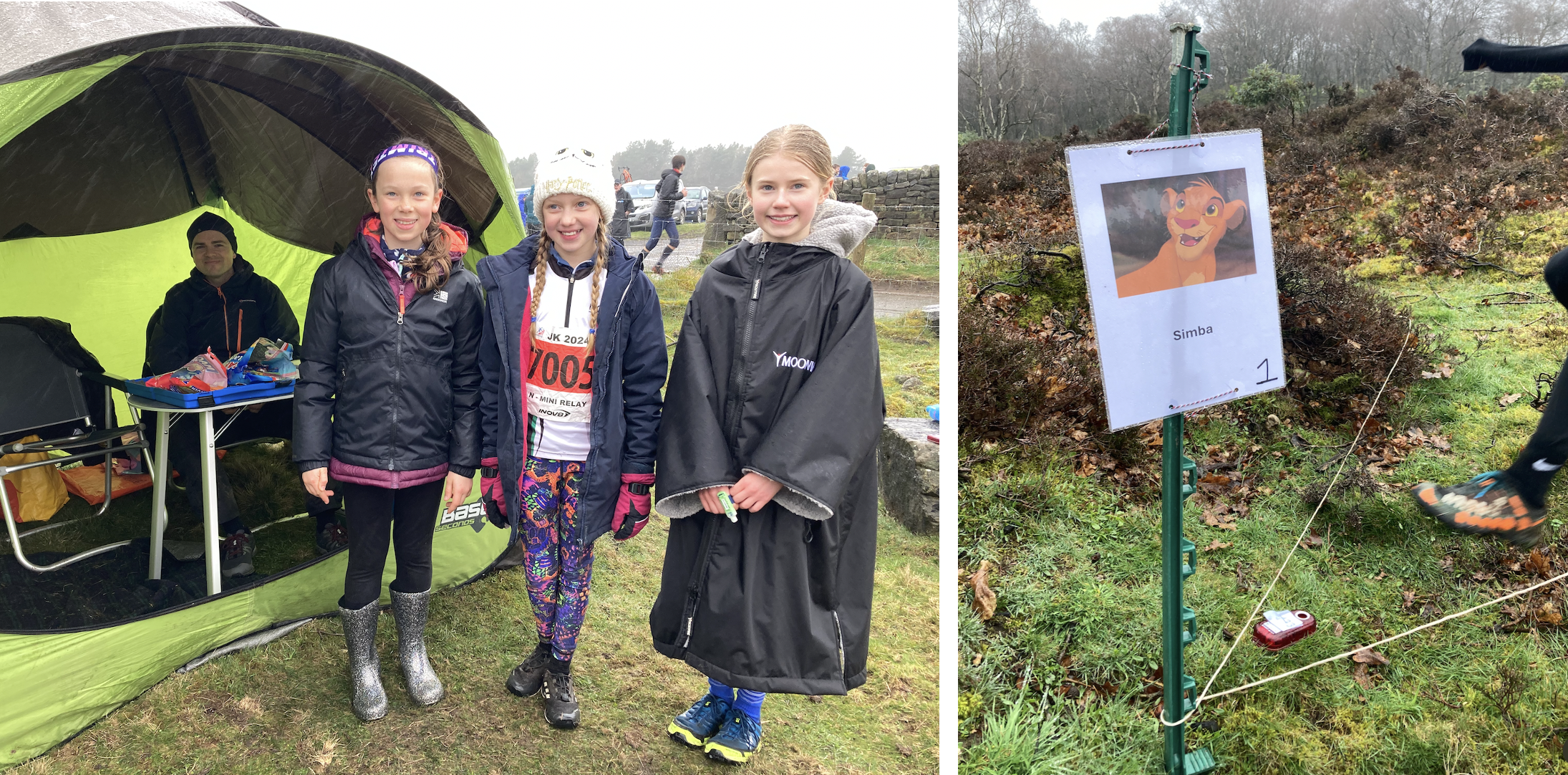
We did need a Mini Mass Start – actually a punching start but with 2 SI boxes to reduce delays. After this, the Start pen could come down, but the Start kite and handover lanes must stay up until course closure time or until the last competitor has finished.
The Prize-giving took place where the Start pen had been, and setting up needed a flurry of volunteers. We had three medal presenters, our landowner doing gold and people from British Orienteering doing silver and bronze.
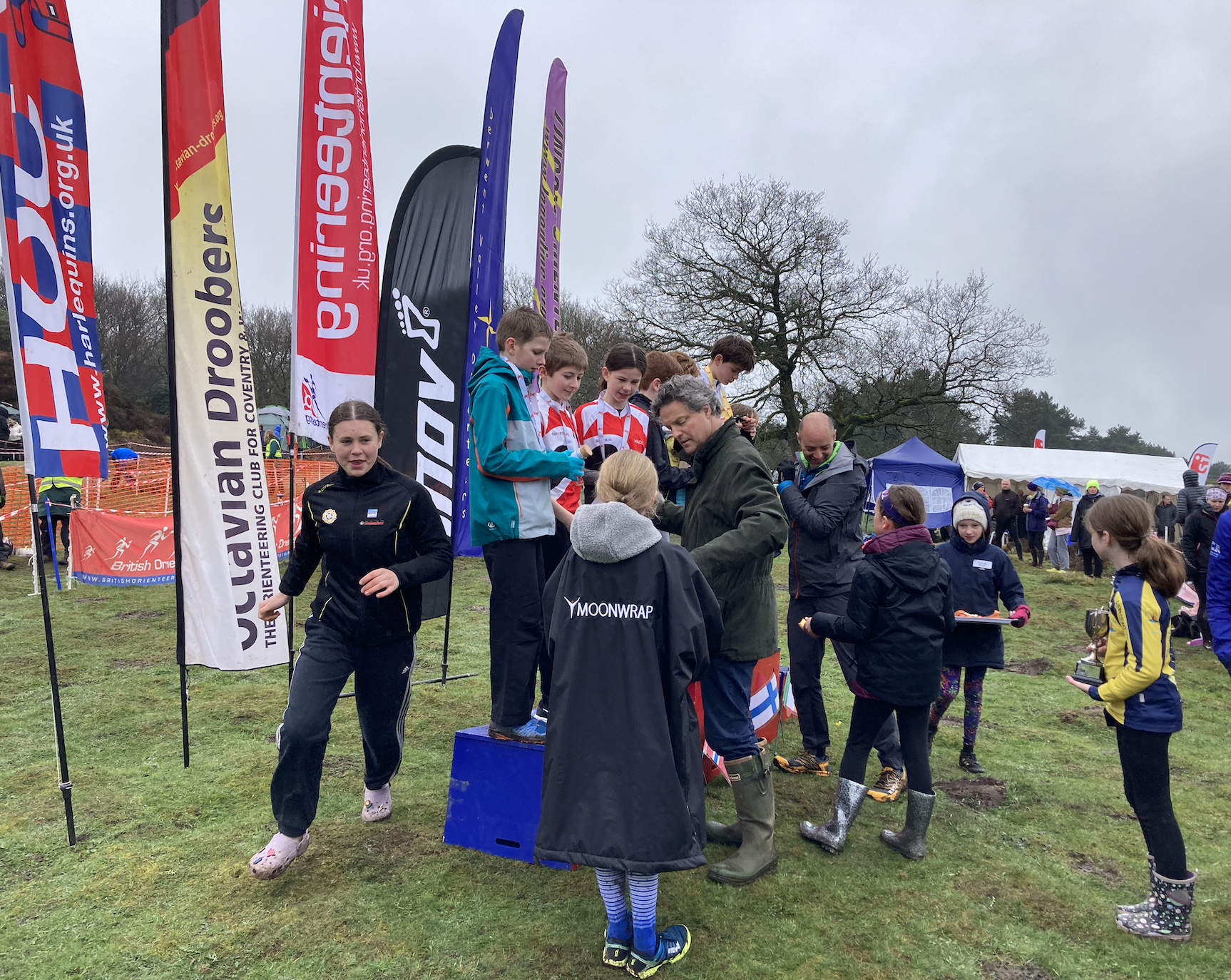
Arena strike down was amazingly quick after the 3-day prep, with so many helpers on site, and we were home by 5pm able to dry the kit out. A fantastic effort from 80 DVO volunteers and the rest of the Relays Team! 1100 runners from seven different nations, two years of planning suddenly over, but some great memories!
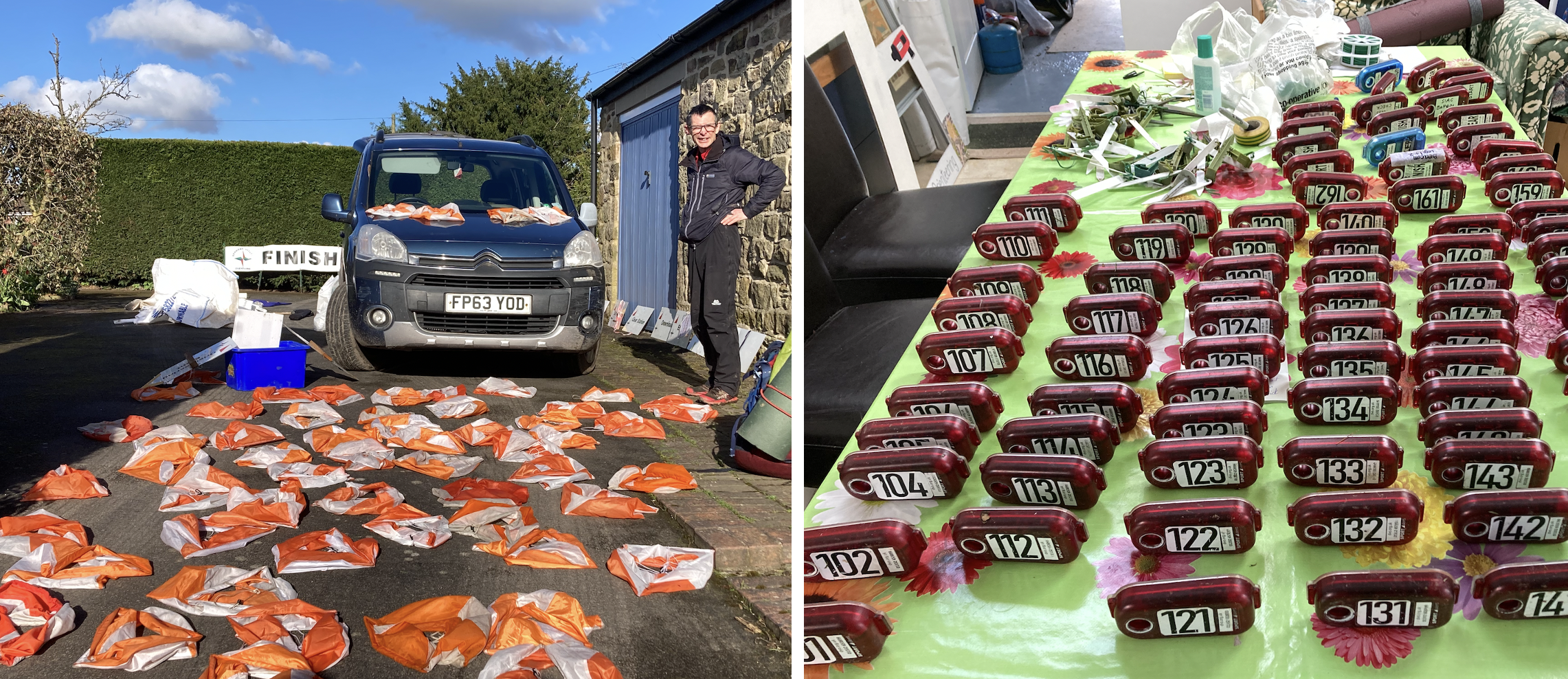
We needed to visit a couple of days later to retrieve some equipment and check the site. We also did a litter pick as a good-will gesture, although none of the litter we found was from orienteers!
 Sal's Ultra Blog
Leave a comment